Seminar Announcement – Björn Drobot
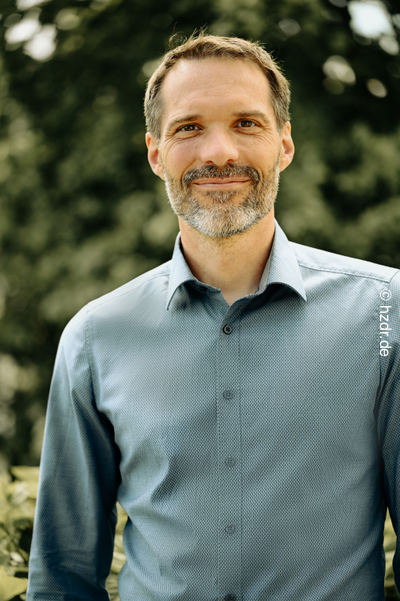
Speaker: Dr. Björn Drobot, Head of Biophysics Department, Institute of Resource Ecology at the Helmholtz-Zentrum Dresden-Rossendorf e.V.
Title:”A Chemical Reaction Model for Complex Coacervation Resolved by Isothermal Titration Calorimetry”
Date: Tuesday, 01 December 2026
Time: 12:00
Room: B CUBE E73+E74, 01307 Dresden
Host: Research Training Group Biomolecular Condensates (RTG 3120)
Abstract:
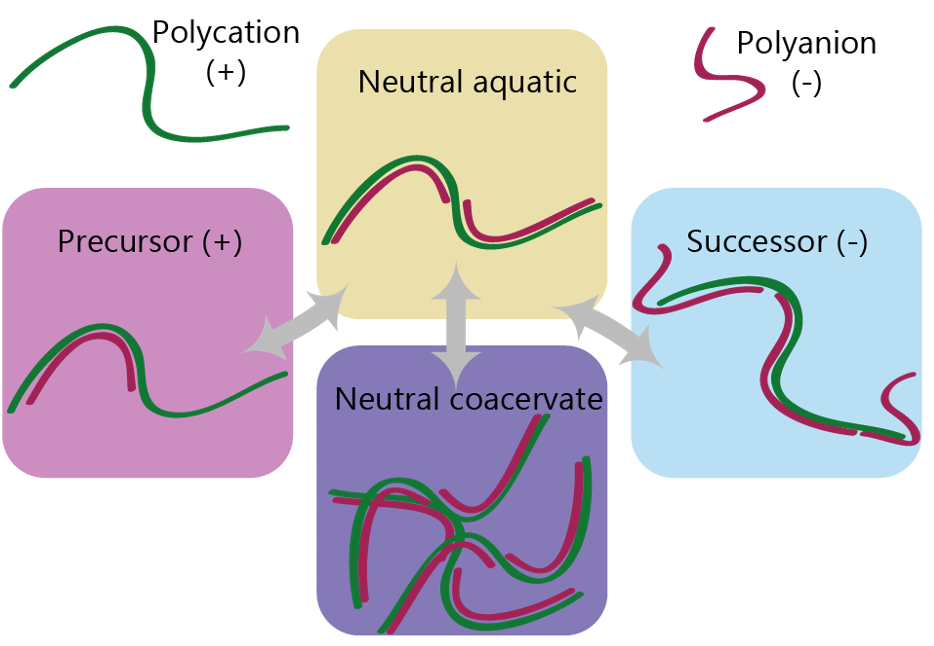
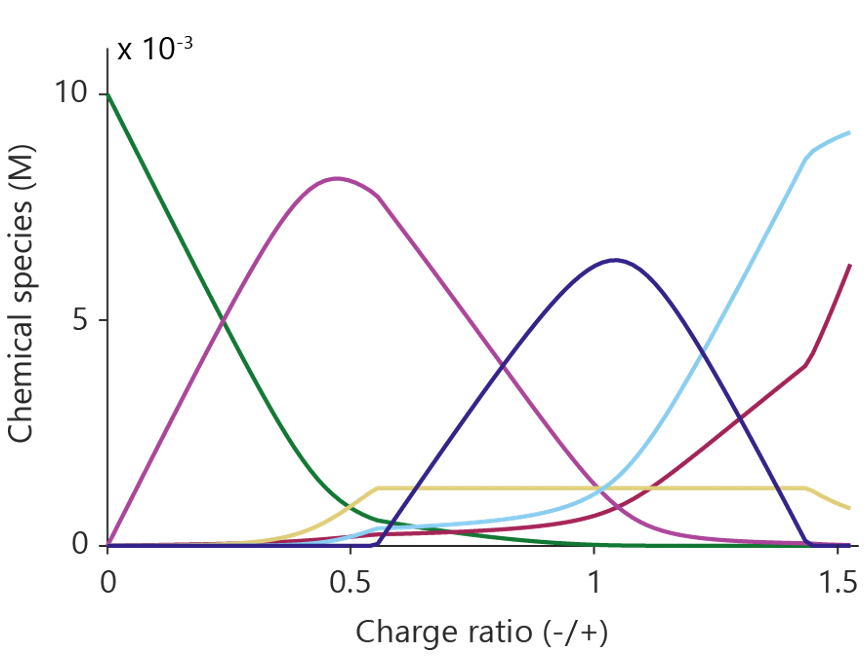
Complex coacervation is a liquid-liquid phase separation process of central interest in food science, cosmetics, synthetic biology, cell biology and origin-of-life research. Although the name emphasizes chemical complex formation, explicit chemical reactions are rarely considered in existing coacervation models. We present a model describing coacervation as a chemical equilibrium between six species: the two free, oppositely charged polyelectrolytes and four complexes formed between them, namely a charged precursor, a dissolved neutral complex, a phase-separating neutral complex, and a charged successor. ITC is a powerful tool to study the interactions of such systems, and the recorded data can be interpreted in terms of the stability constants, reaction enthalpies and stoichiometries of the individual species. To reduce the number of free fit parameters, the stoichiometry of the neutral complex was determined independently by Raman spectroscopy, exploiting polymer-specific signals within the coacervate phase. We applied our model to two different polymer systems, poly(diallyldimethylammonium chloride) / carboxymethyl-dextran and poly-L-lysine / RNA. For both systems, all complexation steps were found to be endothermic, indicating that complexation and, in particular, phase separation are entropy-driven. The resulting speciation was validated independently by microscopy measurements of coacervate phase volume in a concentration regime an order of magnitude higher than used for ITC, showing excellent quantitative agreement. Our results demonstrate that ITC, combined with Raman spectroscopy and microscopy, can resolve the chemical reaction network underlying complex coacervation and provide a quantitative, transferable framework for its description across different polyelectrolyte systems.