
B5 - Role of condensates in epigenetics
Role of condensates in epigenetics (B5)
Objective
The goal of of B5 is to understand the physical mechanism behind the maintenance of the epigenetic state of chromatin through multiple cell generations. This is achieved by combining experiments and the-ory to study a well-defined setup which includes chromatin stretching, polymer-assisted conden-sation and enzymatic reactions.
Project Description
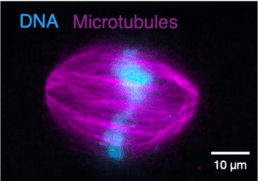
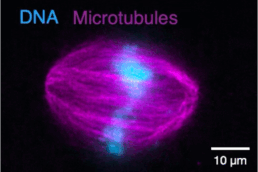
During the duplication of chromosomes, epigenetic information which resided in posttranslational modifications on histone proteins is equally distributed between the two daughter chromosomes. We proposed recently that the missing epigenetic tags can be reconstructed with the help of condensates that are formed from proteins such as HP1. Polymer-assisted condensates are formed around stretches of heterochromatin and serve as liquid reaction containers where enzymes (such as SUV39H1 methylase) add missing tags. The Schiessel group has used their expertise in computer simulations on small model chromosomes to demonstrate that polymer-assisted condensates are capable of maintaining the epigenetic state through 40 generations, thus reaching the Hayflick limit. The Brugués group uses their expertise in single molecule approaches and cell free extracts to test these ideas by using optical tweezers where a full chromosome and single DNA strands can be held in place and stretched in the cytoplasm from Xenopus egg extracts, a system in which replication can be induced. We will quantify the dynamics of the epigenetic state and test whether it can be maintained in the presence of HP1 and SUV39H1 through multiple cell generations. Simulations and theory will study how increasing tension breaks up HP1 droplets, transforming chromosomes into strings of micelles.

Research questions
- Can we visualize experimentally HP1 condensates forming along stretched chromosomes?
- What happens to the number and sizes of HP1 droplets as one increases the tension and how does it depend on the epigenetic sequence written along the string of nucleosomes?
- Can we demonstrate that condensate formation is maintained through several duplications in the presence of enzymatic reactions but suppressed otherwise? Does the disruption of an epigenetic condensate (for example by force) lead to the loss of epigenetic memory?
Thesis Project Topic
- Topic 1 (Schiessel): Geometry and function of co-polymer-assisted micelles (Theory)
- Topic 2 (Brugués): Emergent properties of chromatin (Experimental)
Training
The PhD students in the theory part of the project will be trained in mathematical-analytical methods, various simulation methods and numerical concepts. The PhD students in the experimental part will be trained in quantitative microscopy, optical tweezers, condensate quantification and manipulation, DNA biophysics.
Profile of Prospective Students
- Candidates have a Masters degree in physics or related fields.
- Candidates should have a sound basis in biophysics, computational biology, or closely related fields.
- Experience in computer simulations is expected in Topic 1.
- Experience with in vitro reconstitution systems is a plus in Topic 2.

Supervisors: Helmut Schiessel (left) and Jan Brugués (right)
Theoretical Physics of Living Matter (Schiessel)
Disciplines: Biological Physics & Quantitative Biology
Affiliation: Physics of Life (TU Dresden)
Contact: helmut.schiessel (at) tu-dresden (dot) de
Spatiotemporal Organization of Subcellular Structures (Brugués)
Disciplines: Molecular, Cell & Developmental Biology / Biological Physics & Quantitative Biology
Affiliation: Physics of Life (TU Dresden) | CSBD
Contact: jan.brugues (at) tu-dresden (dot) de
Explore other RTG Thesis Projects

Collaborations within the RTG
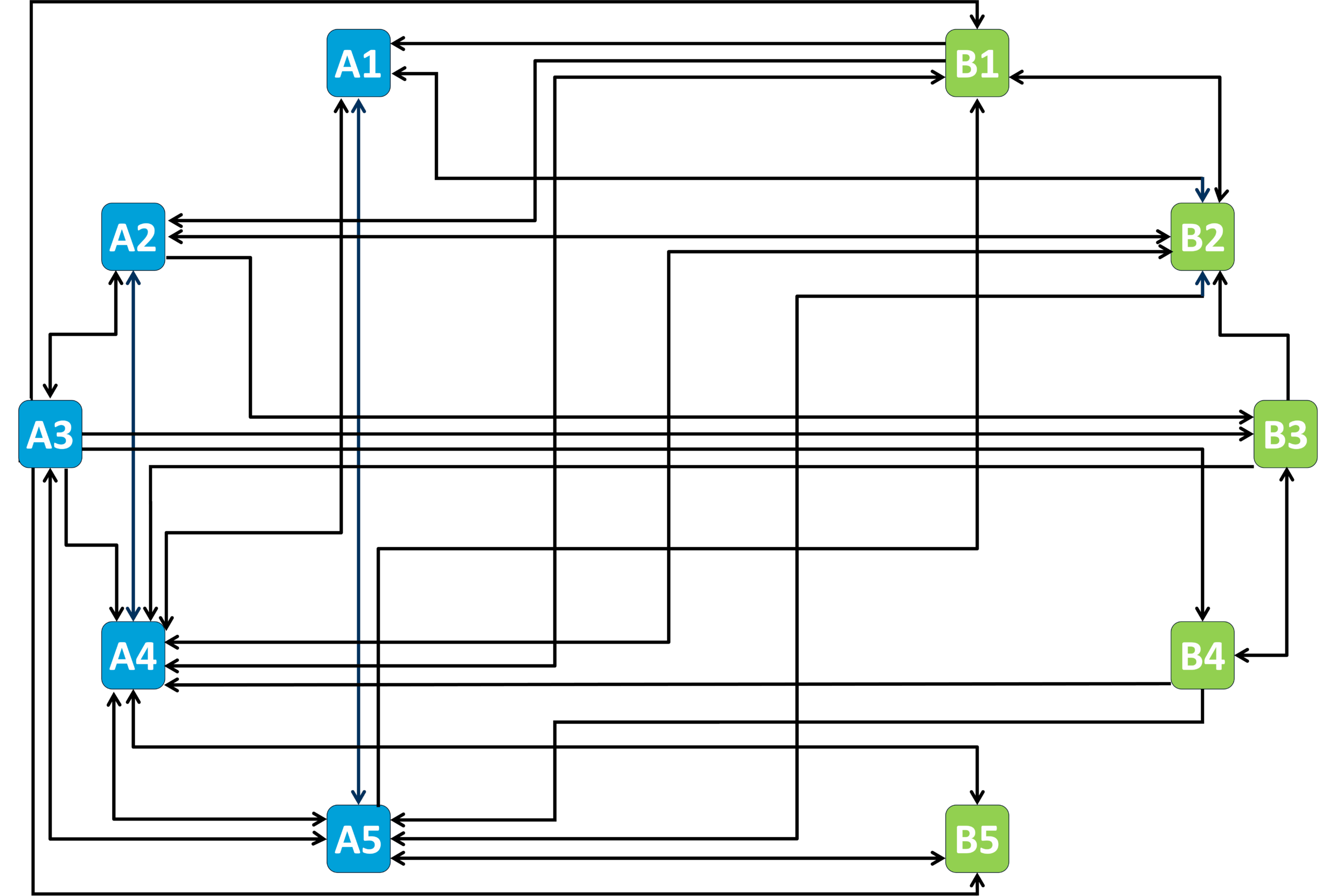
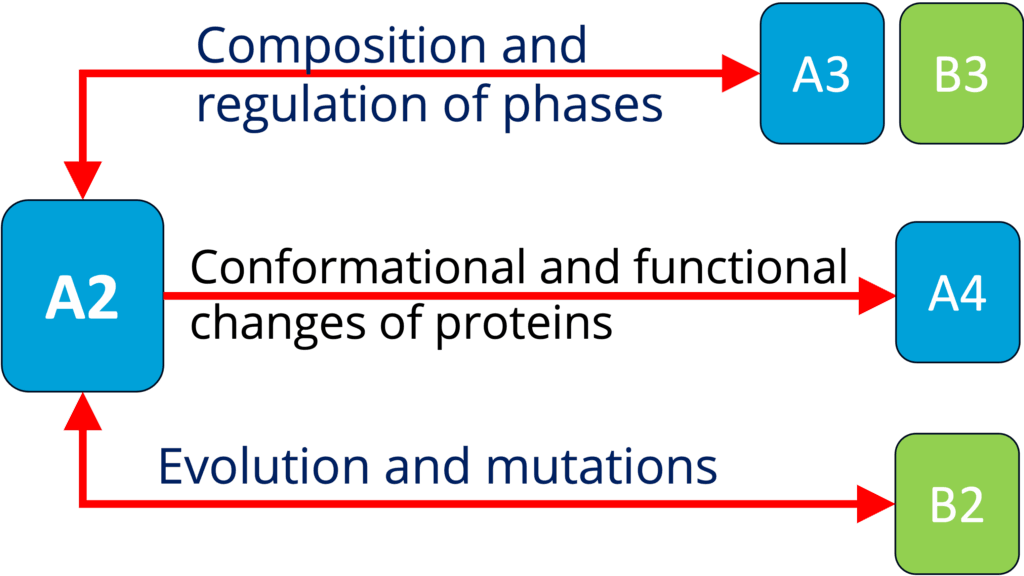
Click on the different project numbers (e.g. A1) to find out more about the theme of their ongoing collaborations and explore the project details
A2 - Biomolecular condensate regulation (Harmon)
See project details: https://dresdencondensates.org/projects/a2/
A4 - Theory and simulation of polymer-assisted condensates (Sommer)
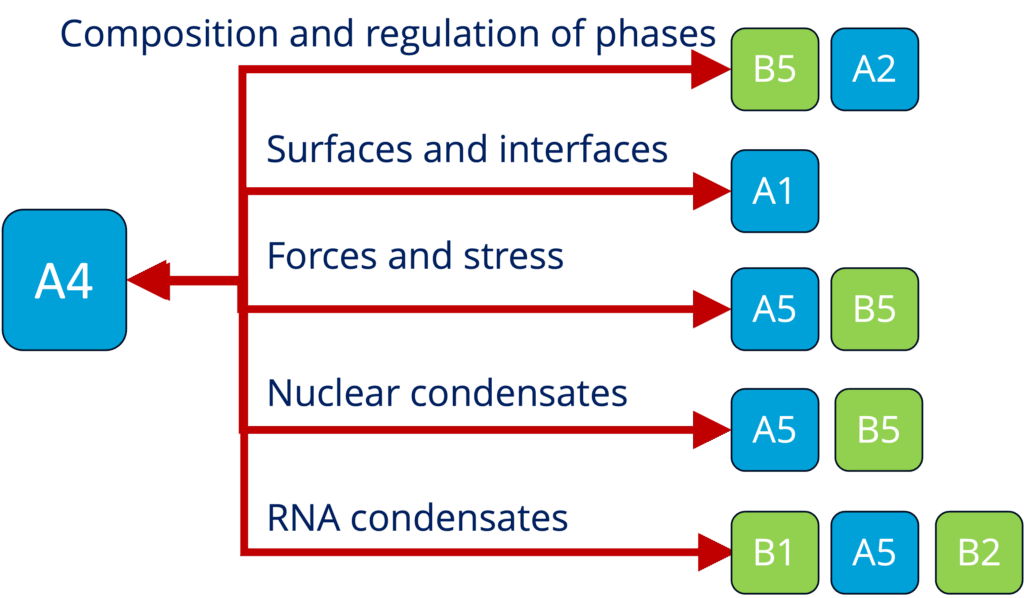
See project details: https://dresdencondensates.org/projects/a4/
B2 - Characterizing the role of RNP granules in ALS (Sterneckert)
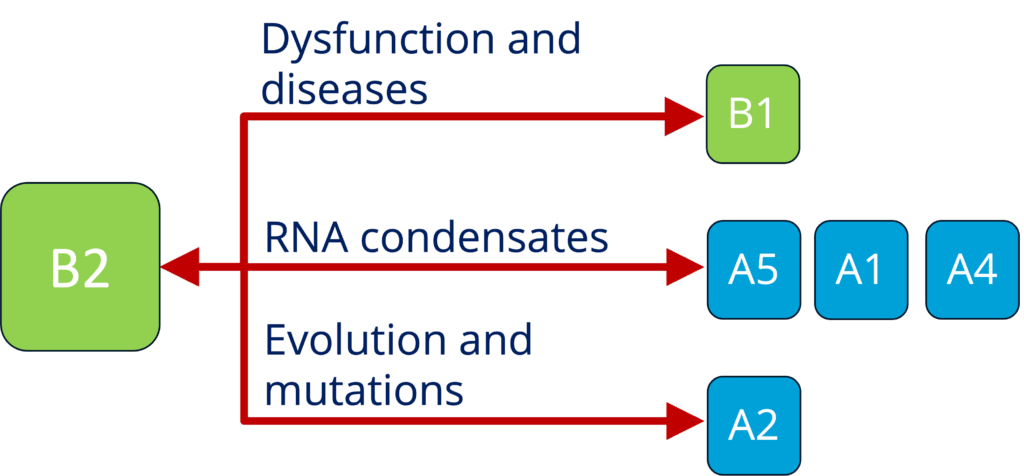
See project details: https://dresdencondensates.org/projects/b2/
A1 - Role of surface condensation for the assembly of cortical proteins (Honigmann)
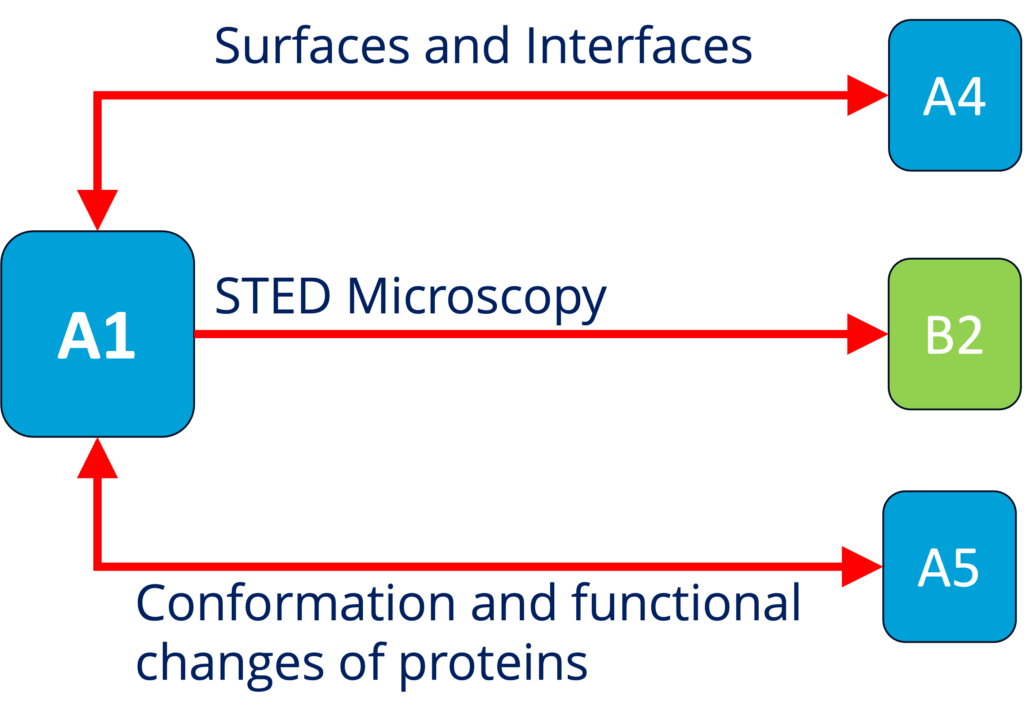
See project details: https://dresdencondensates.org/projects/a1/
A3 - Spectroscopy and local interactions in condensates and organization of the cytoplasm (Adams)
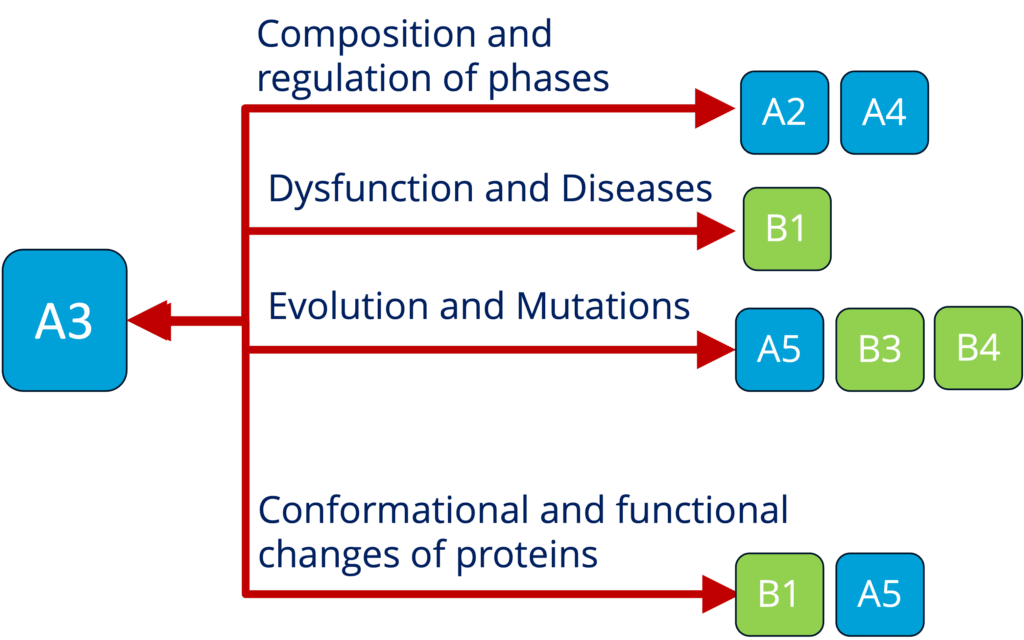
See project details: https://dresdencondensates.org/projects/a3/
A5 - Capillary forces and the force response of condensates (Jahnel and Grill)
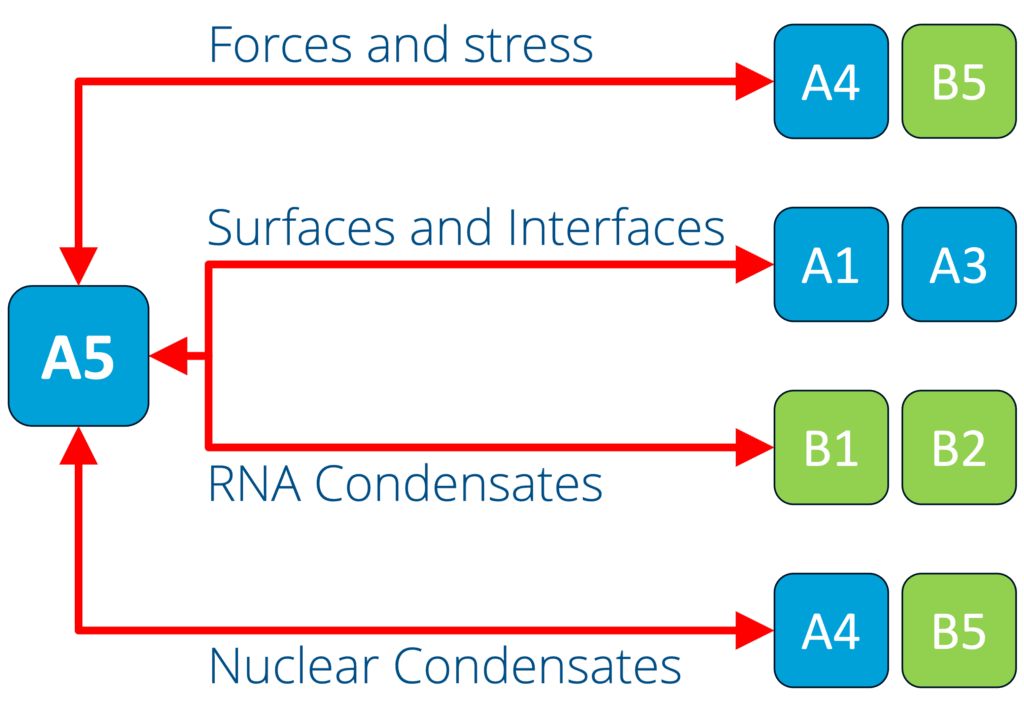
See project details: https://dresdencondensates.org/projects/a5/
B1 - Elucidating the mechanisms underlying mRNA translation regulation by condensation (biophysics and biochemistry) (Alberti and Schlierf)
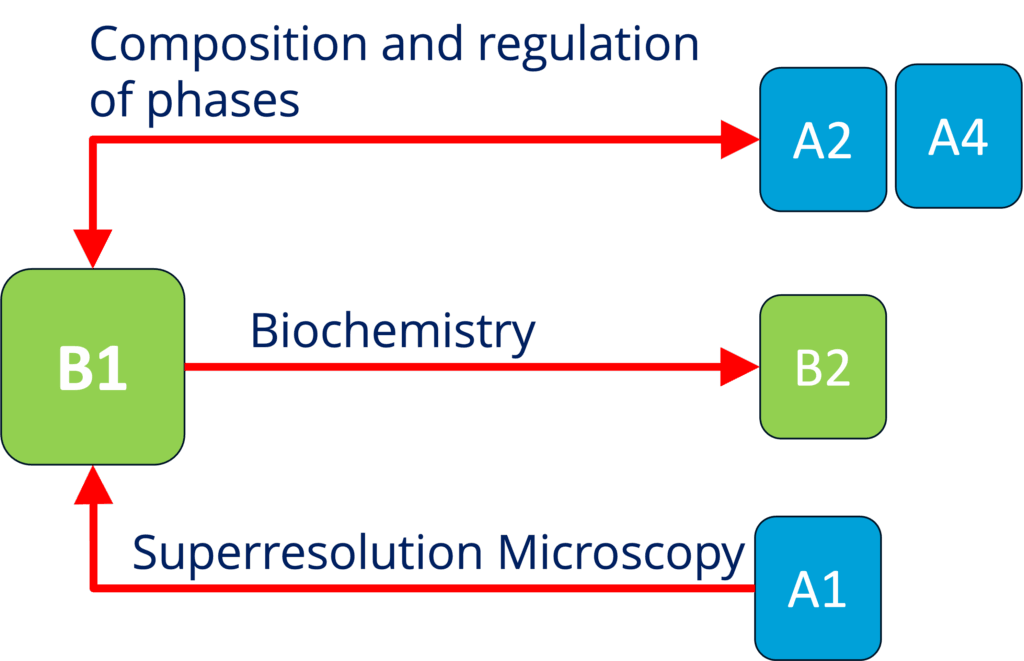
See project details: https://dresdencondensates.org/projects/b1/
B3 - Sequence to function mapping of condensate proteomes (Toth-Petroczy)
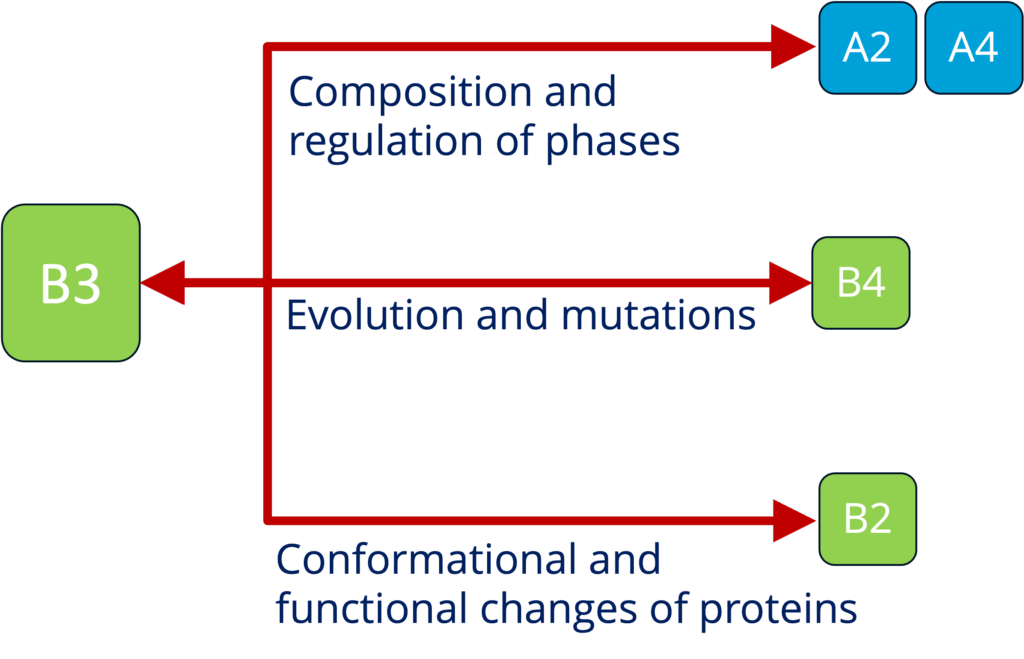
See project details: https://dresdencondensates.org/projects/b3/
B4 - Role of condensates in biological time across mammals (Ebisuya and Hyman)
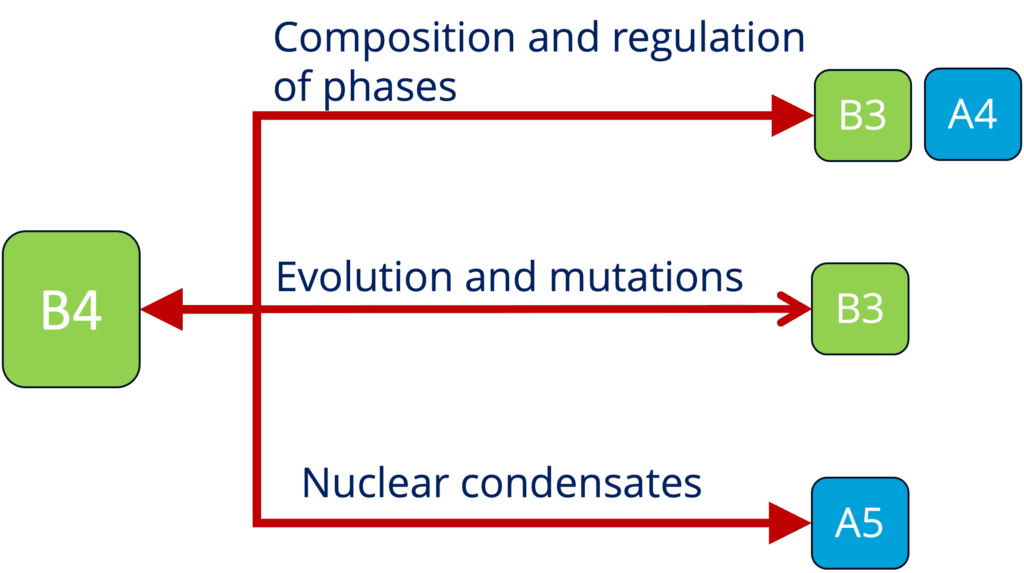
See project details: https://dresdencondensates.org/projects/b4/
B5 - Role of condensates in epigenetics (experiments and theory) (Brugués and Schiessel)
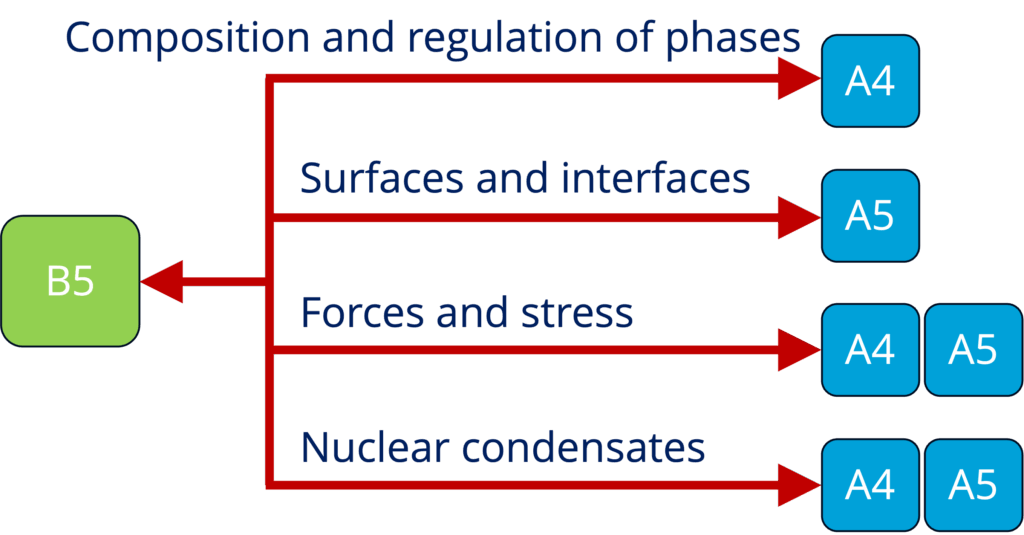
See Project Details: https://dresdencondensates.org/projects/b5/

A2 - Regulation of phase separated droplets
Biomolecular condensate regulation (A2)
Objective
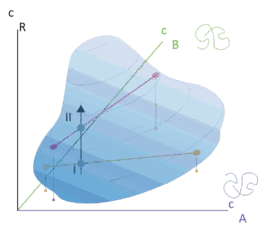
The goal of of A2 is to understand how molecular architecture regulates existence, composition, and properties of multi-component condensates.
Project Description
Cellular condensates contain many components and their precise composition dictates functionality. A key means to regulate condensate composition and properties is through changes in the abundance of other “regulator” molecules that interact with core condensate components through multiple folded or disordered domains. Harmon has studied compositional regulation the-oretically and developed robust and scalable coarse-grained simulations for the phase separation of multi-domain biopolymers containing folded as well as disordered domains. Compositional regulation has been explored in some minimal model systems. However, the general principles by which molecular architecture dictates regulatory possibilities in multi-component condensates remains unknown.

Research questions
What are the basic principles that determine how regulatory proteins control multi-component condensates? How does the design of the scaffold proteins relate to their response to differently designed regulators? To what extent can basic principles of condensate regulation be extended to the higher complexity case of proteins containing folded as well as disordered domains?
Thesis Project Topic
Regulation of condensates driven by multi-domain proteins
Training
The PhD students will be trained in different methodologies for coarse grained simulations, and in analytical and numerical tech-niques, in particular solving Cahn-Hilliard equations and kinetic models for interface dynamics. Using simulations, a library of multi-domain proteins will be studied.
Profile of Prospective Students
- Candidates have a Masters degree in physics or related fields
- Candidates should have a sound basis in statistical physics, soft matter theory or closely related fields.
- Experience in computer simulations and numerical methods are expected

Supervisor: Tyler Harmon
Theory and simulation of biomolecular condensates (Droplets)
Discipline: Theoretical physics
Affiliation: Leibniz IPF Dresden
Contact: tylerharmon (at) ipfdd (dot) de
Explore other RTG Thesis Projects
Collaborations within the RTG
Click on the different project numbers (e.g. A1) to find out more about the theme of their ongoing collaborations and explore the project details
A2 - Biomolecular condensate regulation (Harmon)
See project details: https://dresdencondensates.org/projects/a2/
A4 - Theory and simulation of polymer-assisted condensates (Sommer)
See project details: https://dresdencondensates.org/projects/a4/
B2 - Characterizing the role of RNP granules in ALS (Sterneckert)
See project details: https://dresdencondensates.org/projects/b2/
A1 - Role of surface condensation for the assembly of cortical proteins (Honigmann)
See project details: https://dresdencondensates.org/projects/a1/
A3 - Spectroscopy and local interactions in condensates and organization of the cytoplasm (Adams)
See project details: https://dresdencondensates.org/projects/a3/
A5 - Capillary forces and the force response of condensates (Jahnel and Grill)
See project details: https://dresdencondensates.org/projects/a5/
B1 - Elucidating the mechanisms underlying mRNA translation regulation by condensation (biophysics and biochemistry) (Alberti and Schlierf)
See project details: https://dresdencondensates.org/projects/b1/
B3 - Sequence to function mapping of condensate proteomes (Toth-Petroczy)
See project details: https://dresdencondensates.org/projects/b3/
B4 - Role of condensates in biological time across mammals (Ebisuya and Hyman)
See project details: https://dresdencondensates.org/projects/b4/
B5 - Role of condensates in epigenetics (experiments and theory) (Brugués and Schiessel)
See Project Details: https://dresdencondensates.org/projects/b5/
A4 - Theory and simulation of polymer-assisted condensates
Theory and simulation of polymer-assisted condensates (A4)
Objective
The goal of of A4 is to understand formation, dissolution and functions of multi-component polymer assisted condensates using generic concepts of polymer physics.
Project Description
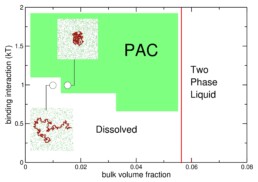
Large biopolymers such as DNA and RNA,play a pivotal role in the formation of condensates, owing to their low mixing entropy and vast number of conformational degrees of freedom. In particular, they can locally trigger condensate formation.
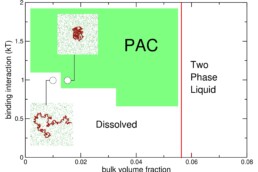
The Sommer group has pioneered analytical and simulation-based approaches to study polymers in multi-component solutions, predicting unusual phase transitions such as co-nonsolvency and polymer-assisted condensation (PAC). In collaboration with the Schiessel group, the PAC concept has been applied to explain the formation of heterochromatin and mechanisms of epigenetic inheritance.
Currently, we are investigating more complex scenarios, including wetting behavior and compartmentalization in multi-component condensates. Computer simulations play a key role in exploring and analyzing these complex phase behaviors.
Research questions
- How can multi-phase coexistence be incorporated into the polymer-assisted condensation (PAC) model?
- How can coarse-grained simulations be refined to model specific condensate problems such as DNA target search, DNA repair, polymerization/depolymerization processes (PAR), or post-translational modifications?
- How can field-theoretic methods be applied to explore the phase space of complex protein/polynucleotide solutions? How can these concepts be extended to understand the dynamics of condensates?
Thesis Project Topic
Training
The PhD students will be trained in mathematical-analytical methods, polymer physics and statistical thermodynamics of phase transitions, various simulation methods and numerical concepts.
Profile of Prospective Students
- Candidates have a Masters degree in physics or related fields
- Candidates should have a sound basis in statistical physics, soft matter theory or closely related fields.
- Experience in computer simulations and numerical methods are expected

Supervisor: Jens-Uwe Sommer
Soft Matter Theory and Polymer Physics
Discipline: Theoretical physics
Affiliation: TU Dresden, Faculty of Physics | Leibniz IPF Dresden | Physics of Life (TU Dresden)
Contact: jens-uwe.sommer (at) tu-dresden (dot) de
Explore other RTG Thesis Projects
Collaborations within the RTG
Click on the different project numbers (e.g. A1) to find out more about the theme of their ongoing collaborations and explore the project details
A2 - Biomolecular condensate regulation (Harmon)
See project details: https://dresdencondensates.org/projects/a2/
A4 - Theory and simulation of polymer-assisted condensates (Sommer)
See project details: https://dresdencondensates.org/projects/a4/
B2 - Characterizing the role of RNP granules in ALS (Sterneckert)
See project details: https://dresdencondensates.org/projects/b2/
A1 - Role of surface condensation for the assembly of cortical proteins (Honigmann)
See project details: https://dresdencondensates.org/projects/a1/
A3 - Spectroscopy and local interactions in condensates and organization of the cytoplasm (Adams)
See project details: https://dresdencondensates.org/projects/a3/
A5 - Capillary forces and the force response of condensates (Jahnel and Grill)
See project details: https://dresdencondensates.org/projects/a5/
B1 - Elucidating the mechanisms underlying mRNA translation regulation by condensation (biophysics and biochemistry) (Alberti and Schlierf)
See project details: https://dresdencondensates.org/projects/b1/
B3 - Sequence to function mapping of condensate proteomes (Toth-Petroczy)
See project details: https://dresdencondensates.org/projects/b3/
B4 - Role of condensates in biological time across mammals (Ebisuya and Hyman)
See project details: https://dresdencondensates.org/projects/b4/
B5 - Role of condensates in epigenetics (experiments and theory) (Brugués and Schiessel)
See Project Details: https://dresdencondensates.org/projects/b5/