
B5 - Role of condensates in epigenetics
Role of condensates in epigenetics (B5)
Objective
The goal of of B5 is to understand the physical mechanism behind the maintenance of the epigenetic state of chromatin through multiple cell generations. This is achieved by combining experiments and the-ory to study a well-defined setup which includes chromatin stretching, polymer-assisted conden-sation and enzymatic reactions.
Project Description
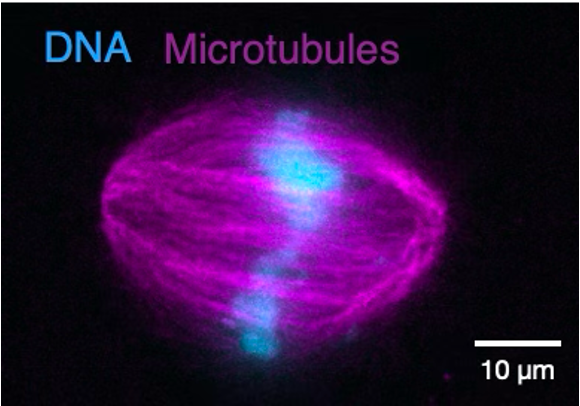
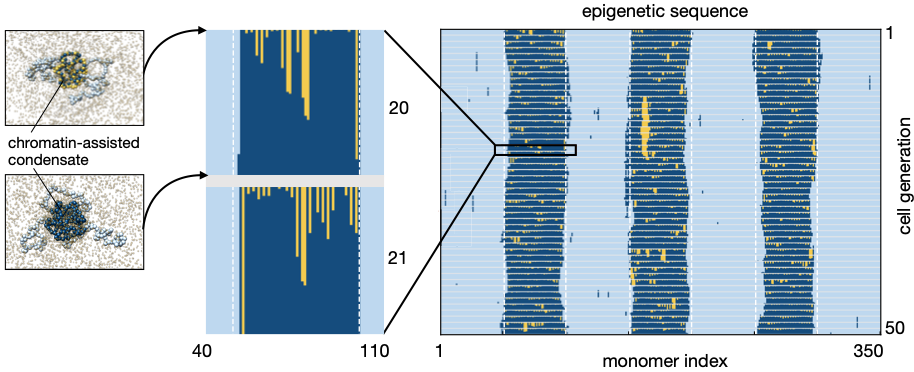
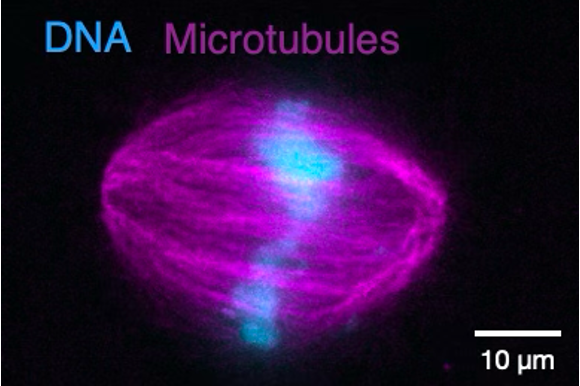
During the duplication of chromosomes, epigenetic information which resided in posttranslational modifications on histone proteins is equally distributed between the two daughter chromosomes. We proposed recently that the missing epigenetic tags can be reconstructed with the help of condensates that are formed from proteins such as HP1. Polymer-assisted condensates are formed around stretches of heterochromatin and serve as liquid reaction containers where enzymes (such as SUV39H1 methylase) add missing tags. The Schiessel group has used their expertise in computer simulations on small model chromosomes to demonstrate that polymer-assisted condensates are capable of maintaining the epigenetic state through 40 generations, thus reaching the Hayflick limit. The Brugués group uses their expertise in single molecule approaches and cell free extracts to test these ideas by using optical tweezers where a full chromosome and single DNA strands can be held in place and stretched in the cytoplasm from Xenopus egg extracts, a system in which replication can be induced. We will quantify the dynamics of the epigenetic state and test whether it can be maintained in the presence of HP1 and SUV39H1 through multiple cell generations. Simulations and theory will study how increasing tension breaks up HP1 droplets, transforming chromosomes into strings of micelles.
Research questions
- Can we visualize experimentally HP1 condensates forming along stretched chromosomes?
- What happens to the number and sizes of HP1 droplets as one increases the tension and how does it depend on the epigenetic sequence written along the string of nucleosomes?
- Can we demonstrate that condensate formation is maintained through several duplications in the presence of enzymatic reactions but suppressed otherwise? Does the disruption of an epigenetic condensate (for example by force) lead to the loss of epigenetic memory?
Thesis Project Topic
- Topic 1 (Schiessel): Geometry and function of co-polymer-assisted micelles (Theory)
- Topic 2 (Brugués): Emergent properties of chromatin (Experimental)
Training
The PhD students in the theory part of the project will be trained in mathematical-analytical methods, various simulation methods and numerical concepts. The PhD students in the experimental part will be trained in quantitative microscopy, optical tweezers, condensate quantification and manipulation, DNA biophysics.
Profile of Prospective Students
- Candidates have a Masters degree in physics or related fields.
- Candidates should have a sound basis in biophysics, computational biology, or closely related fields.
- Experience in computer simulations is expected in Topic 1.
- Experience with in vitro reconstitution systems is a plus in Topic 2.

Supervisors: Helmut Schiessel (left) and Jan Brugués (right)
Theoretical Physics of Living Matter (Schiessel)
Disciplines: Biological Physics & Quantitative Biology
Affiliation: Physics of Life (TU Dresden)
Contact: helmut.schiessel (at) tu-dresden (dot) de
Spatiotemporal Organization of Subcellular Structures (Brugués)
Disciplines: Molecular, Cell & Developmental Biology / Biological Physics & Quantitative Biology
Affiliation: Physics of Life (TU Dresden) | CSBD
Contact: jan.brugues (at) tu-dresden (dot) de
Explore other RTG Thesis Projects
Collaborations within the RTG
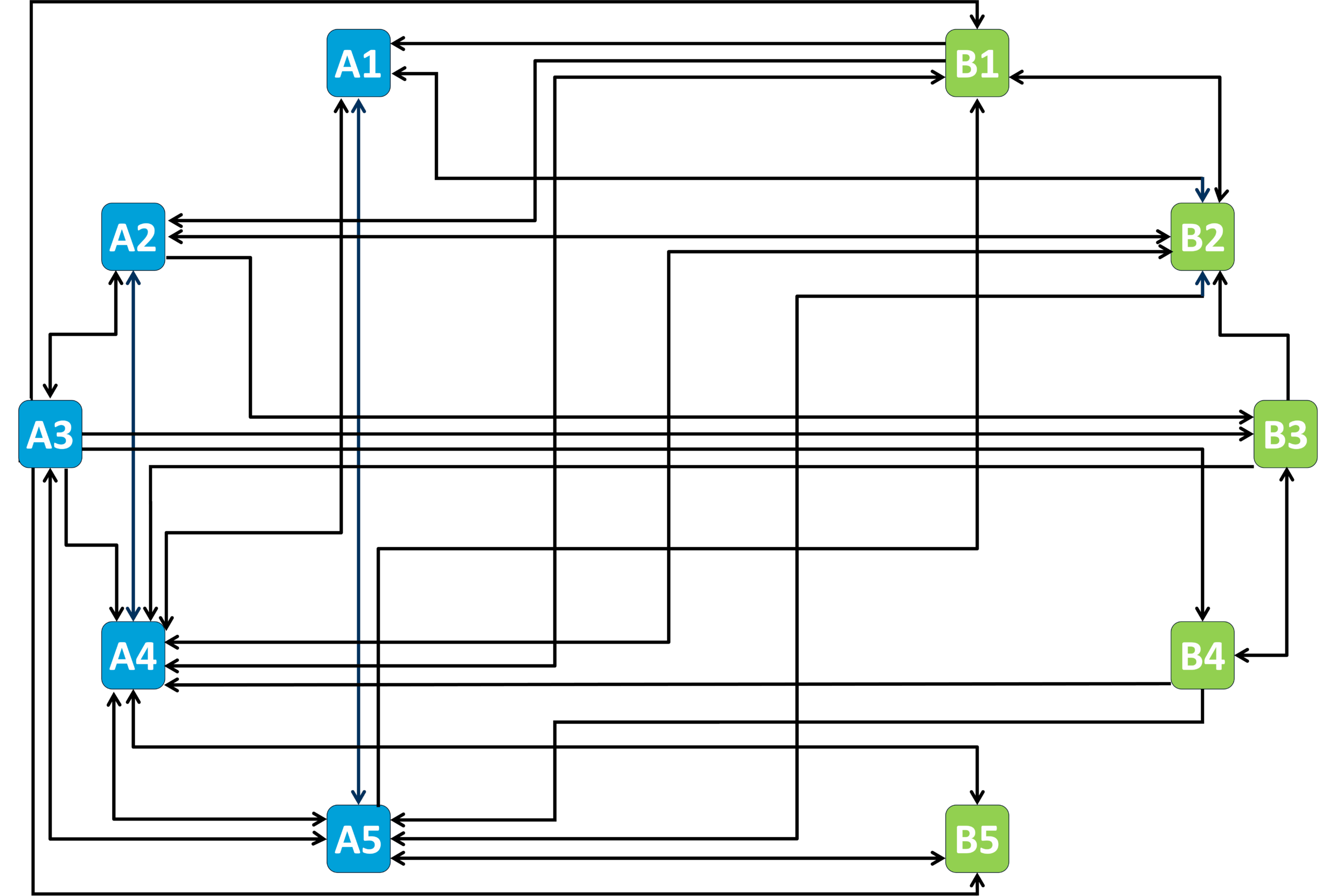
Click on the different project numbers (e.g. A1) to find out more about the theme of their ongoing collaborations and explore the project details
A2 - Biomolecular condensate regulation (Harmon)
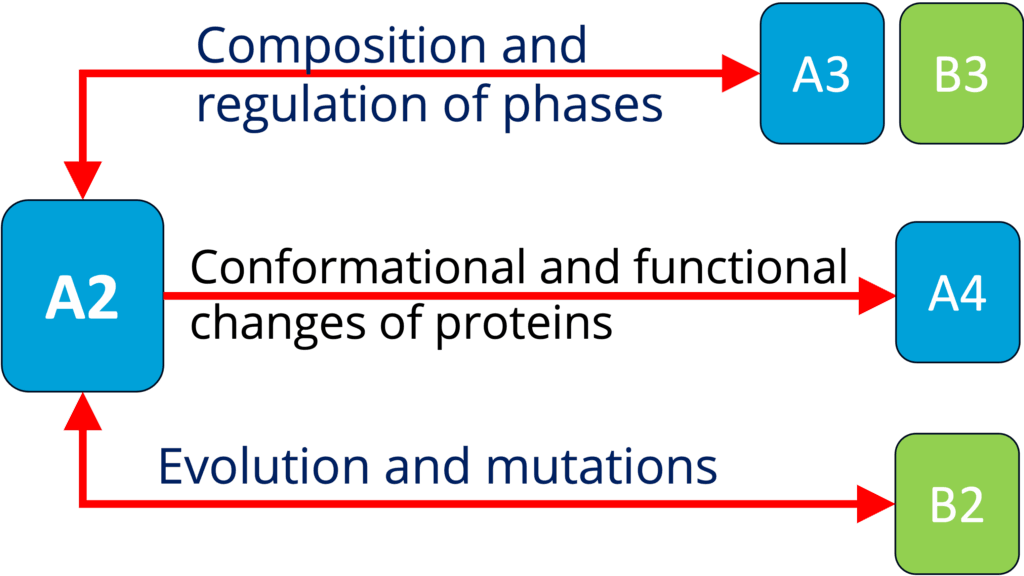
See project details: https://dresdencondensates.org/projects/a2/
A4 - Theory and simulation of polymer-assisted condensates (Sommer)
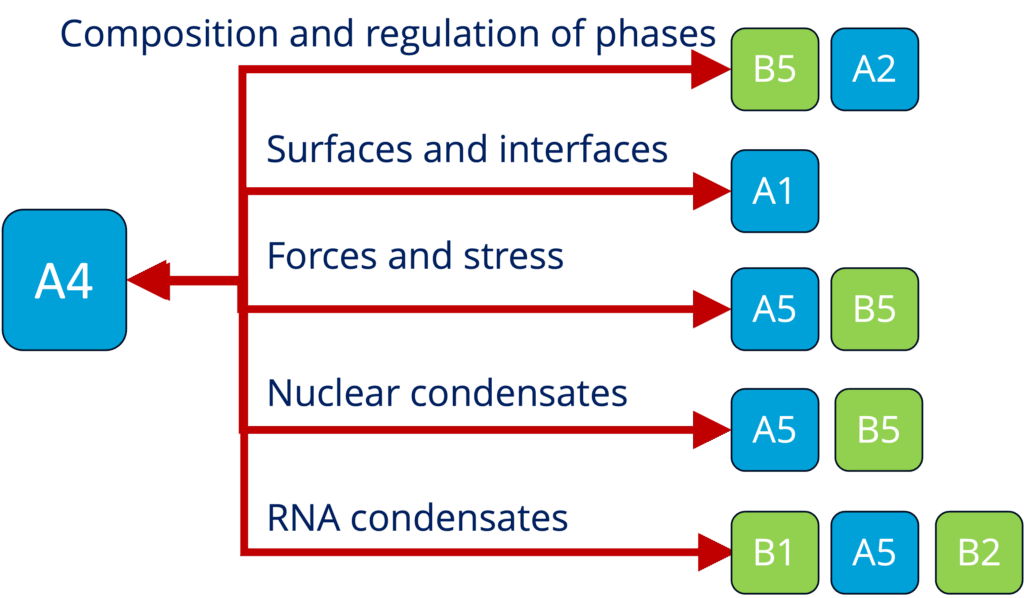
See project details: https://dresdencondensates.org/projects/a4/
B2 - Characterizing the role of RNP granules in ALS (Sterneckert)
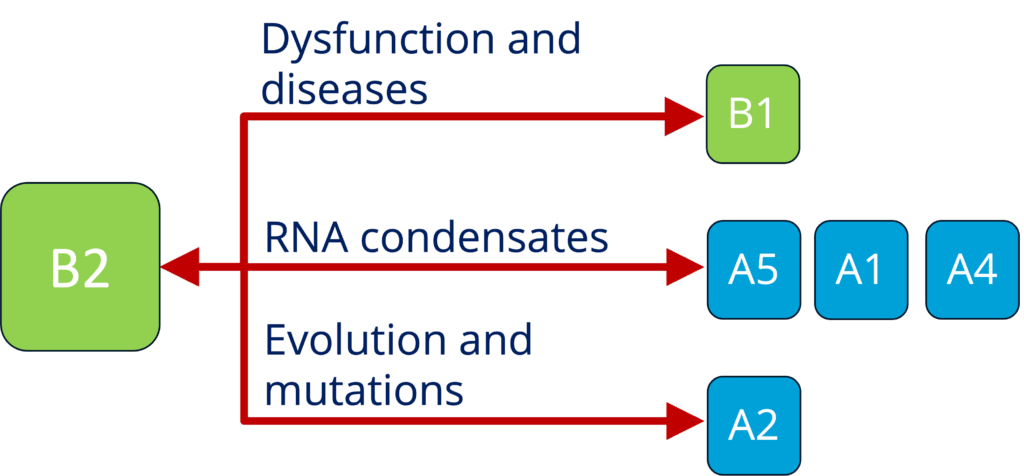
See project details: https://dresdencondensates.org/projects/b2/
A1 - Role of surface condensation for the assembly of cortical proteins (Honigmann)
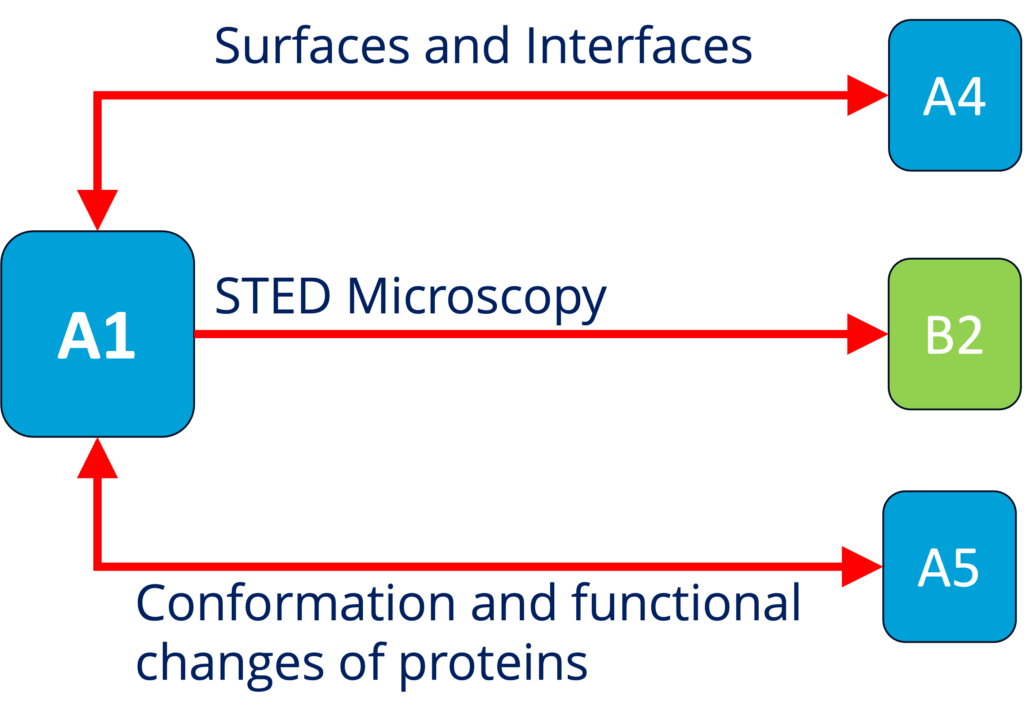
See project details: https://dresdencondensates.org/projects/a1/
A3 - Spectroscopy and local interactions in condensates and organization of the cytoplasm (Adams)
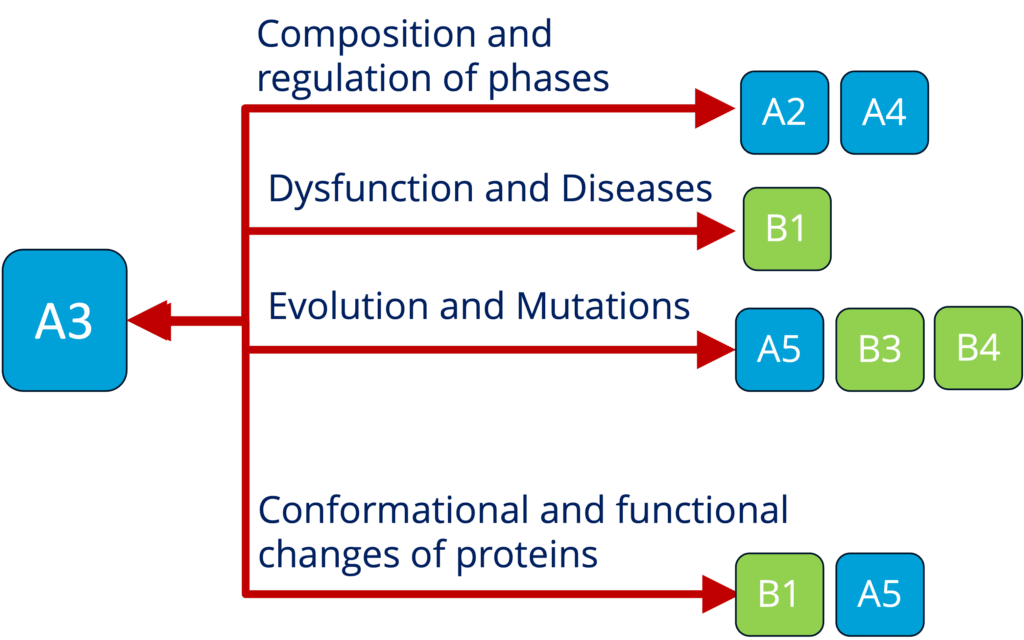
See project details: https://dresdencondensates.org/projects/a3/
A5 - Capillary forces and the force response of condensates (Jahnel and Grill)
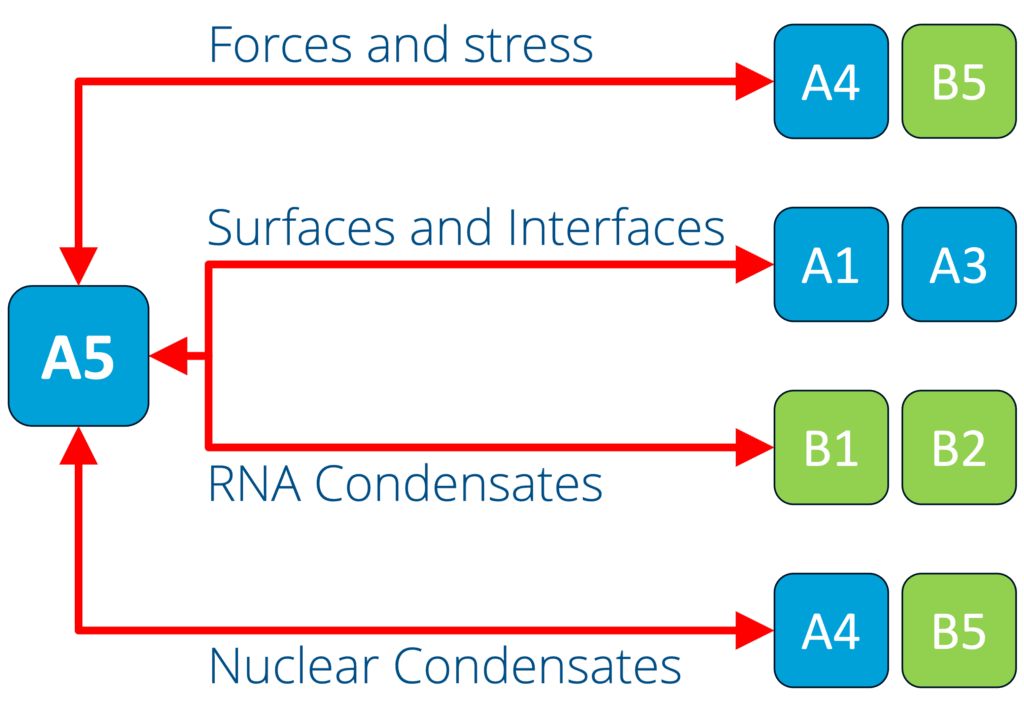
See project details: https://dresdencondensates.org/projects/a5/
B1 - Elucidating the mechanisms underlying mRNA translation regulation by condensation (biophysics and biochemistry) (Alberti and Schlierf)
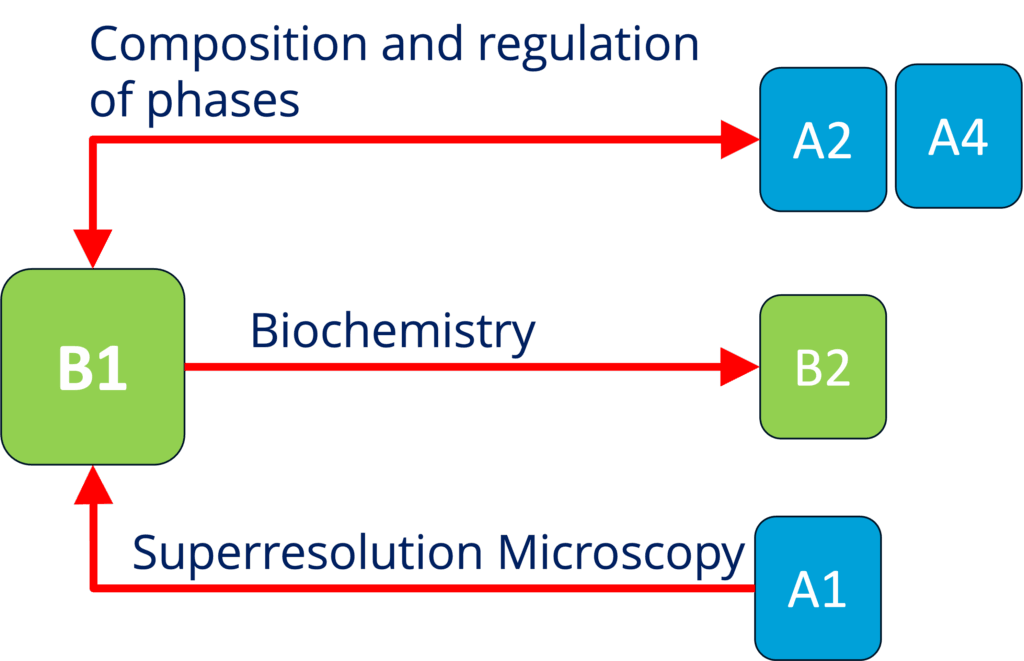
See project details: https://dresdencondensates.org/projects/b1/
B3 - Sequence to function mapping of condensate proteomes (Toth-Petroczy)
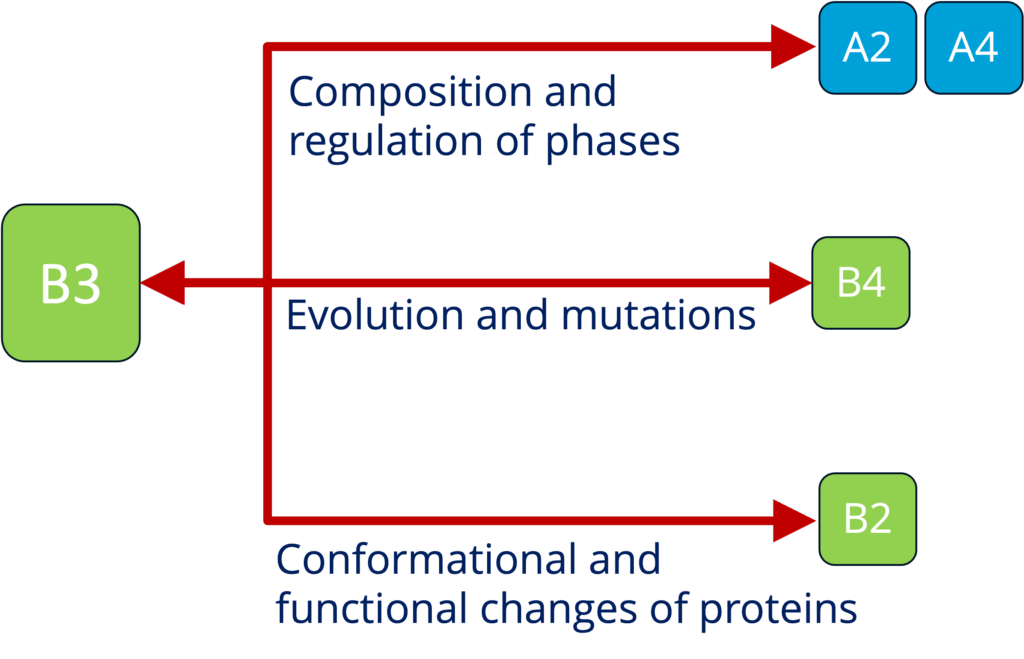
See project details: https://dresdencondensates.org/projects/b3/
B4 - Role of condensates in biological time across mammals (Ebisuya and Hyman)
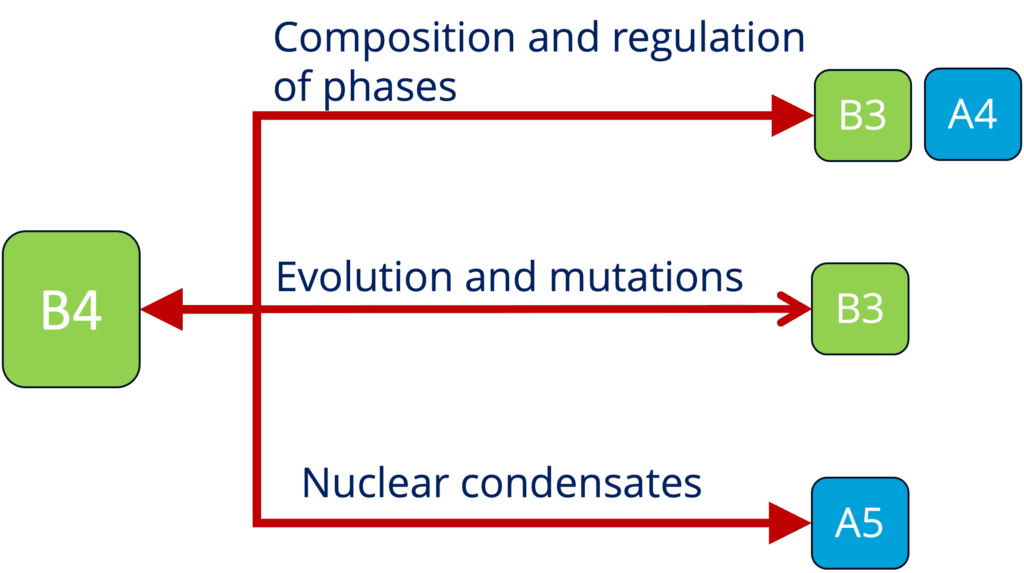
See project details: https://dresdencondensates.org/projects/b4/
B5 - Role of condensates in epigenetics (experiments and theory) (Brugués and Schiessel)
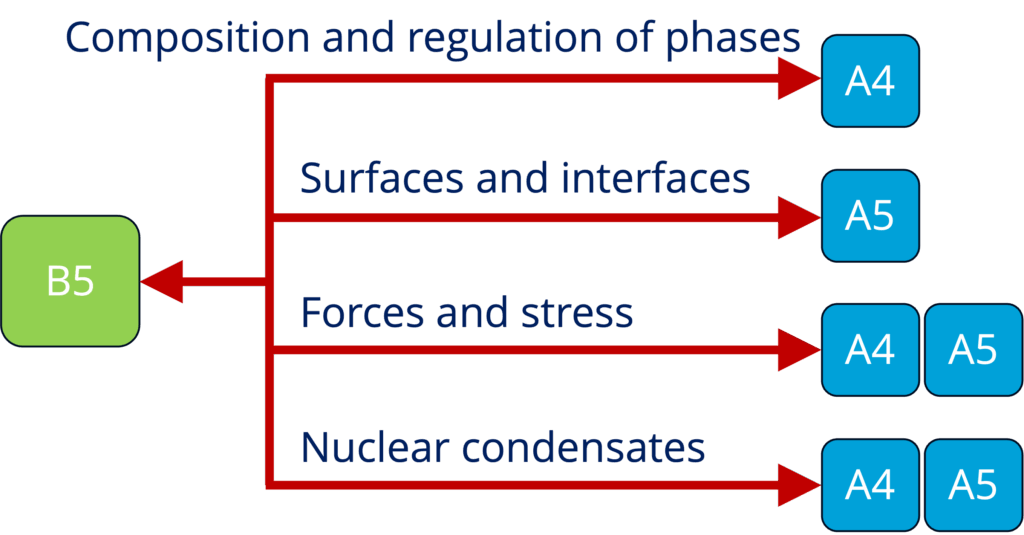
See Project Details: https://dresdencondensates.org/projects/b5/

B4 - Role of condensates in biological time across mammals
Role of condensates in biological time across mammals (B4)
Objective
The goal of of B4 is to characterize the diversity of condensates across animal species and to elucidate how these differences contribute to species-specific kinetics and developmental tempo.
Project Description
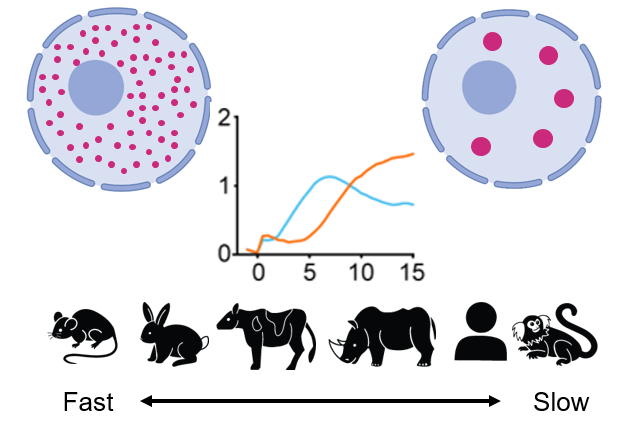
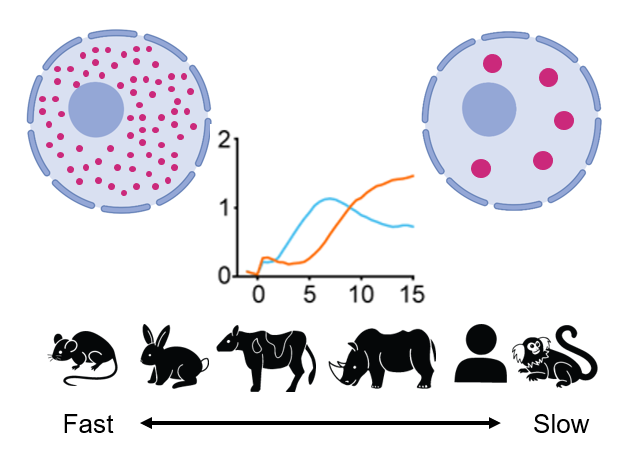
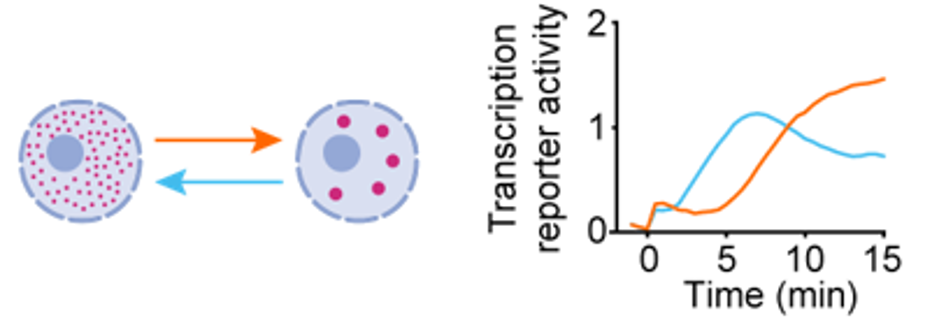
Different animal species exhibit distinct biological tempos. For instance, human gestation takes about 9 months, whereas in mice it lasts only around 20 days. The Ebisuya group investigates these species-specific tempos using the “stem cell zoo,” a collection of mammalian stem cell lines, and has demonstrated that cellular environments differ across species. The Hyman group focuses on the physical properties of biomolecular condensates both in vitro and in cells. In collaboration, the groups recently found that the morphology of several condensates involved in gene expression processes differs between species. A key open question is whether such species-specific condensate properties influence biochemical reaction kinetics and thereby contribute to differences in biological tempo. Project B4 aims to address this fundamental question by systematically measuring the kinetics of condensates and associated cellular processes.
Research questions
- How do the kinetics and morphology of condensates vary across species?
- What are the underlying mechanisms that give rise to these species-specific condensate properties?
- Do such differential condensate properties contribute to species-specific cellular kinetics and biological tempo?
Project Topic
Quantitative characterization of condensates and gene expression kinetics across species
Training
The student will receive training in cell and stem cell biology, advanced imaging and image analysis, as well as biophysical and biochemical approaches.
Profile of Prospective Student Candidates
- Student candidates should hold a Master’s degree in biology, physics, or a related field. Candidates are expected to have hands-on experience with laboratory experiments; prior experience with cell cultures and/or imaging is a plus.

Supervisors: Miki Ebisuya (left) and Anthony Hyman (right)
Cross-Species Comparison and Manipulation of the Organoid Zoo (Ebisuya)
Disciplines: Molecular, Cell & Developmental Biology / Biological Physics & Quantitative Biology
Affiliation: Physics of Life (TU Dresden)
Contact: miki.ebisuya (at) tu-dresden (dot) de
Organization of the Cytoplasm (Hyman)
Disciplines: Cell Biology and Biochemistry
Affiliation: MPI-CBG | CSBD | Physics of Life (TU Dresden)
Contact: hyman (at) mpi-cbg (dot) de
Explore other RTG Thesis Projects
Collaborations within the RTG
Click on the different project numbers (e.g. A1) to find out more about the theme of their ongoing collaborations and explore the project details
A2 - Biomolecular condensate regulation (Harmon)
See project details: https://dresdencondensates.org/projects/a2/
A4 - Theory and simulation of polymer-assisted condensates (Sommer)
See project details: https://dresdencondensates.org/projects/a4/
B2 - Characterizing the role of RNP granules in ALS (Sterneckert)
See project details: https://dresdencondensates.org/projects/b2/
A1 - Role of surface condensation for the assembly of cortical proteins (Honigmann)
See project details: https://dresdencondensates.org/projects/a1/
A3 - Spectroscopy and local interactions in condensates and organization of the cytoplasm (Adams)
See project details: https://dresdencondensates.org/projects/a3/
A5 - Capillary forces and the force response of condensates (Jahnel and Grill)
See project details: https://dresdencondensates.org/projects/a5/
B1 - Elucidating the mechanisms underlying mRNA translation regulation by condensation (biophysics and biochemistry) (Alberti and Schlierf)
See project details: https://dresdencondensates.org/projects/b1/
B3 - Sequence to function mapping of condensate proteomes (Toth-Petroczy)
See project details: https://dresdencondensates.org/projects/b3/
B4 - Role of condensates in biological time across mammals (Ebisuya and Hyman)
See project details: https://dresdencondensates.org/projects/b4/
B5 - Role of condensates in epigenetics (experiments and theory) (Brugués and Schiessel)
See Project Details: https://dresdencondensates.org/projects/b5/

B3 - Sequence to function mapping of condensate proteomes
Sequence to function mapping of condensate proteomes (B3)
Objective
The goal of of B3 is to understand how condensate proteomes and their functions evolve. We aim to decipher which sequence perturbations can lead to gain/loss of condensates and tune specific molecular inter-actions within condensates in evolution and disease.
Project Description
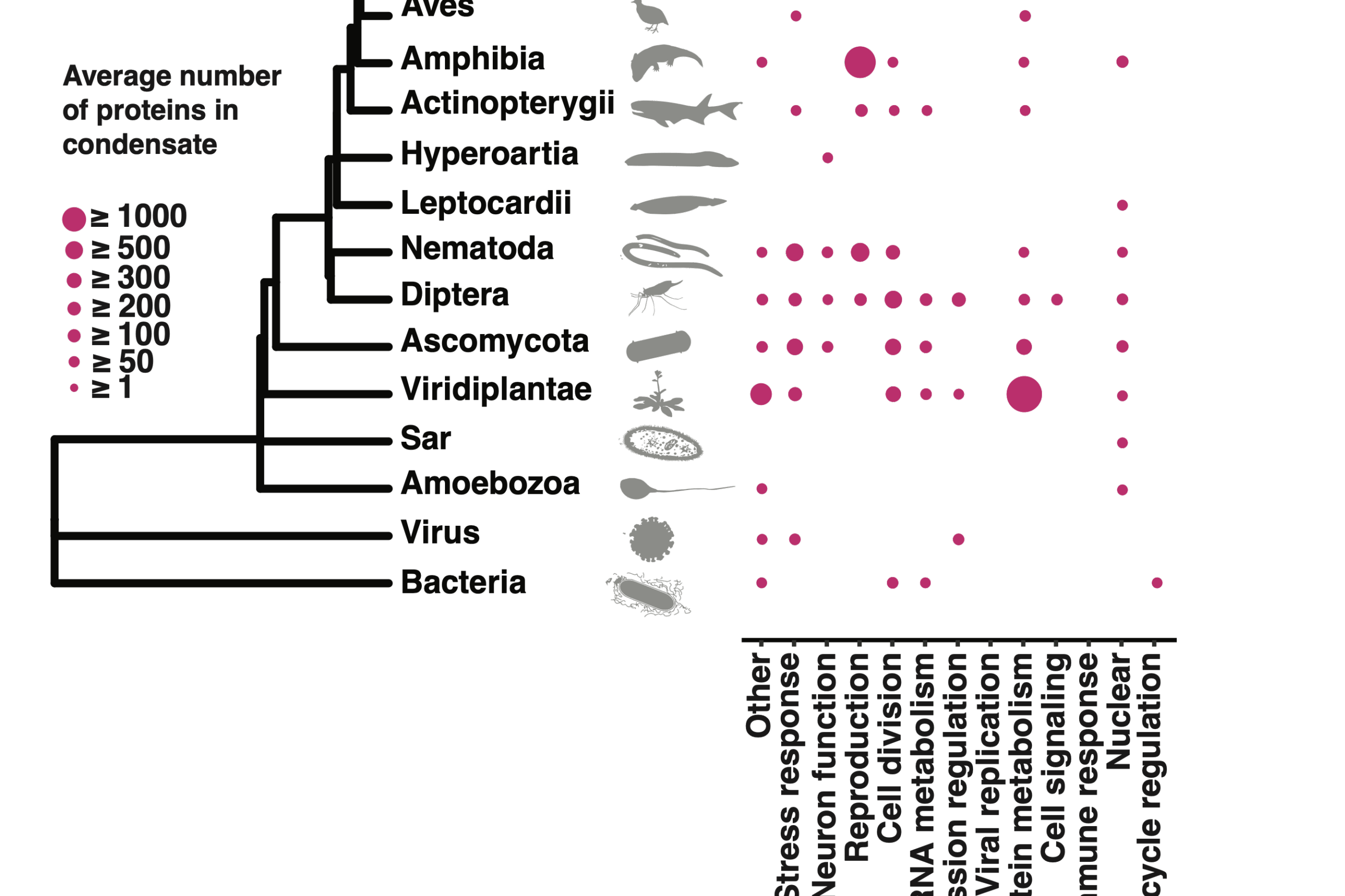
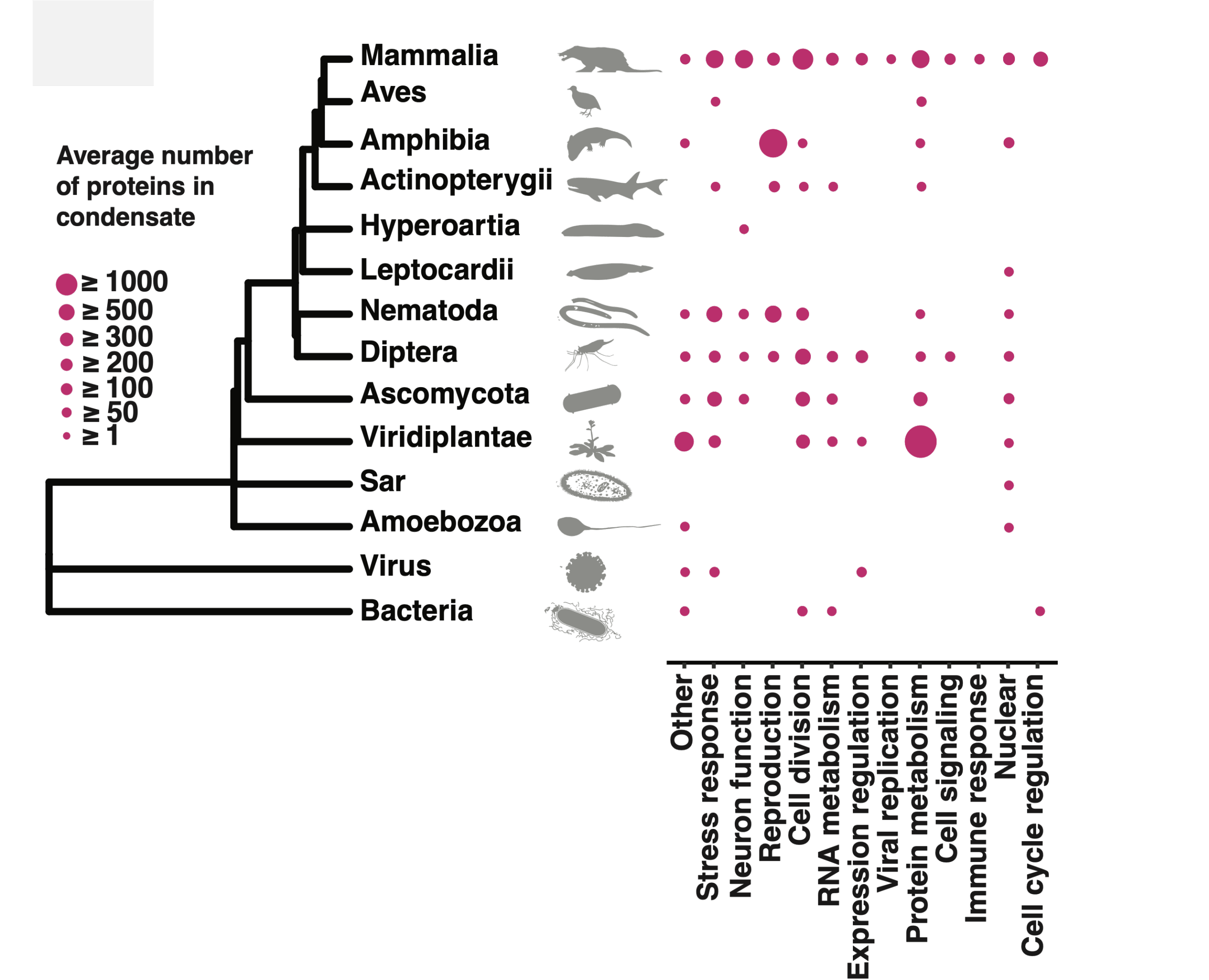
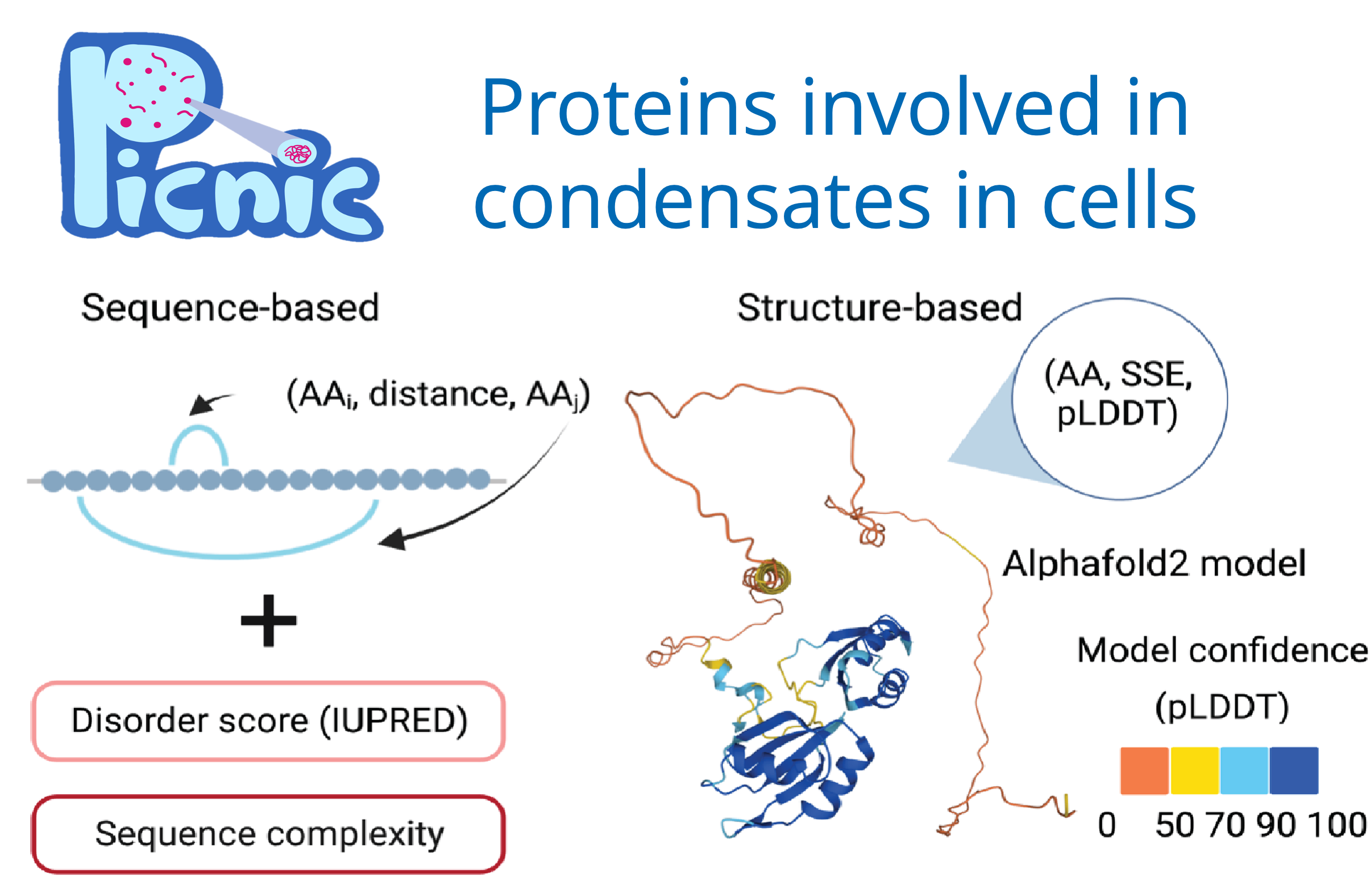
Extensive research on condensates focused on identifying their components, material proper-ties, and function. However, we still lack understanding of the mechanisms that target proteins into condensates and how condensates emerged during evolution. Building on the hypothesis that localization into condensates is encoded in protein sequences, we aim to advance the sequence-function mapping of condensate forming proteins and specifically intrinsically disordered regions (IDRs) that are common in condensates. Here, we will study not only genetic mutations but also phenotypic mutations that occur via transcription and translation errors, which we study in the Toth-Petroczy group. In collaboration with the Hyman group we built a condensate protein database that revealed wide-spread occurrence of condensates across the tree of life. Based on this curated data, we developed a machine learning algorithm to predict condensate proteins in any organism. Further, we have designed a suit of alignment-free algorithms to assess homology between unalignable IDR sequences (SHARK-dive) and developed a method to identify conserved motifs within a set of homologous IDR sequences (SHARK-capture). These tools allow us to address the origin and evolution of condensates and their proteomes, as well as to identify conserved and functional sequence features.
Research questions
- How do condensate proteomes change in evolution?
- How do sequence perturbations impact condensate formation?
Thesis Project Topic
The evolution of condensate proteomes
Training
The PhD students will be trained in data science, coding, machine learning, statistics, and image analysis, mass spectrometry, molecular biology, biochemistry and biophysics techniques in collaborations with experimental groups.
Profile of Prospective Students
- Candidates have a Masters degree in biology, data science, or related fields
- Candidates should have a sound basis in computational or evolutionary biology, or closely related fields.
- Experience in coding and omics data analysis are expected

Supervisor: Agnes Toth-Petroczy
Protein plasticity and evolution
Discipline: Computational Biology
Affiliation: MPI-CBG | CSBD | Physics of Life (TU Dresden)
Contact: tothpet (at) mpi-cbg (dot) de
Explore other RTG Thesis Projects
Collaborations within the RTG
Click on the different project numbers (e.g. A1) to find out more about the theme of their ongoing collaborations and explore the project details
A2 - Biomolecular condensate regulation (Harmon)
See project details: https://dresdencondensates.org/projects/a2/
A4 - Theory and simulation of polymer-assisted condensates (Sommer)
See project details: https://dresdencondensates.org/projects/a4/
B2 - Characterizing the role of RNP granules in ALS (Sterneckert)
See project details: https://dresdencondensates.org/projects/b2/
A1 - Role of surface condensation for the assembly of cortical proteins (Honigmann)
See project details: https://dresdencondensates.org/projects/a1/
A3 - Spectroscopy and local interactions in condensates and organization of the cytoplasm (Adams)
See project details: https://dresdencondensates.org/projects/a3/
A5 - Capillary forces and the force response of condensates (Jahnel and Grill)
See project details: https://dresdencondensates.org/projects/a5/
B1 - Elucidating the mechanisms underlying mRNA translation regulation by condensation (biophysics and biochemistry) (Alberti and Schlierf)
See project details: https://dresdencondensates.org/projects/b1/
B3 - Sequence to function mapping of condensate proteomes (Toth-Petroczy)
See project details: https://dresdencondensates.org/projects/b3/
B4 - Role of condensates in biological time across mammals (Ebisuya and Hyman)
See project details: https://dresdencondensates.org/projects/b4/
B5 - Role of condensates in epigenetics (experiments and theory) (Brugués and Schiessel)
See Project Details: https://dresdencondensates.org/projects/b5/
B2 - Characterizing the role of RNP granules in ALS
Characterizing the role of RNP granules in ALS (B2)
Objective
The goal of B2 is to understand the role of RNP granules in the pathogenesis of amyotrophic lateral sclerosis (ALS).
Project Description
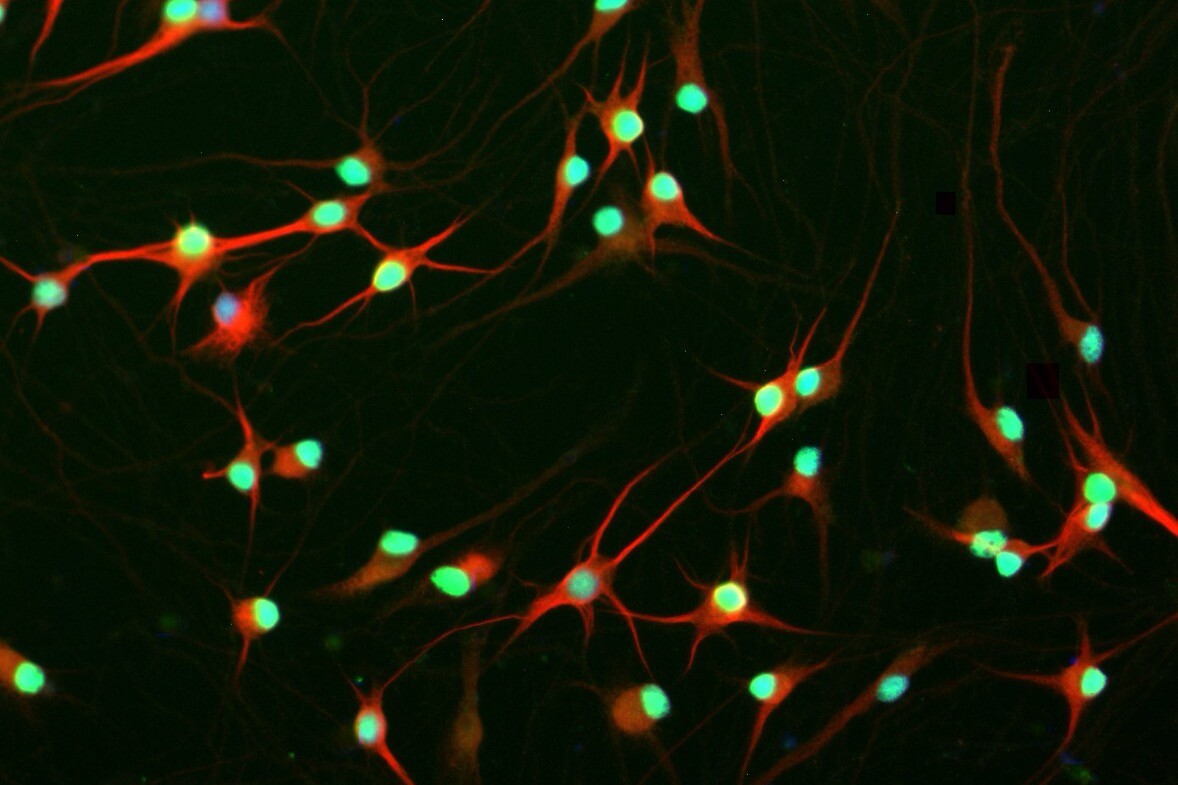
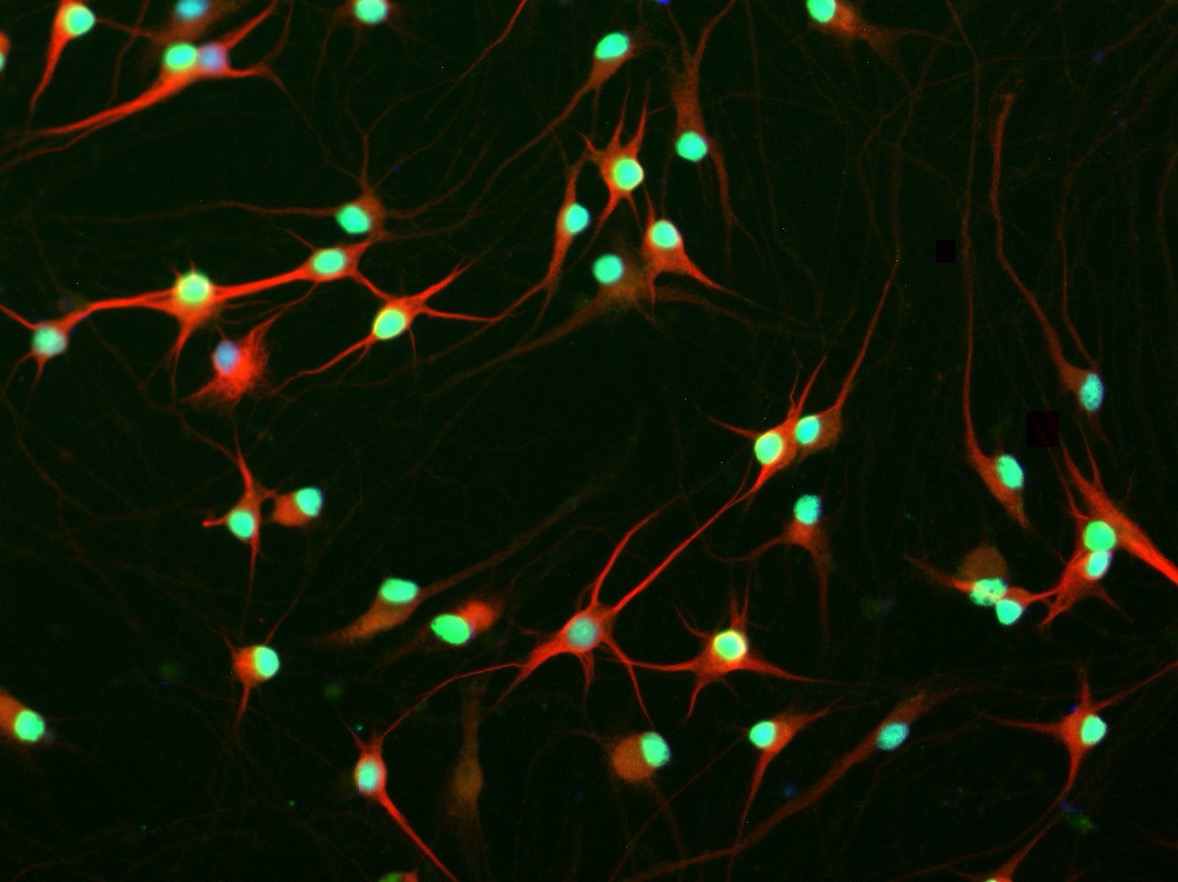
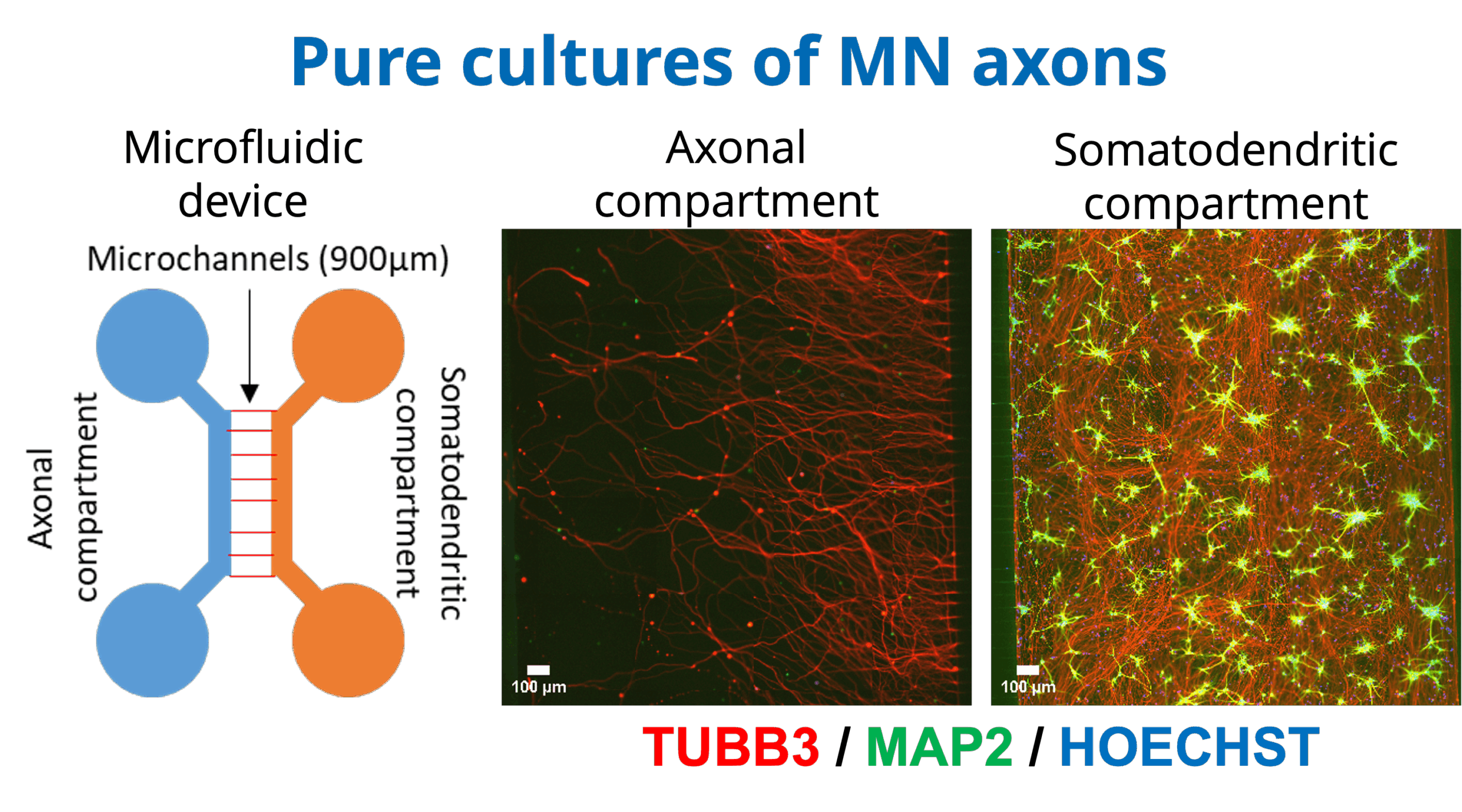
Motor neurons (MNs) have very long axons that require local translation of mRNAs transported from the soma via ribonucleoprotein (RNP) granules. RNP granules are condensates that protect mRNA from degradation in a translationally arrested state1. There are many different types of RNP granules found in MN axons, and MNs are able to disassemble individual granules at specific times and locations in order to support specialized functions such as metabolism or injury repair1. Highlighting the importance of this process, alterations in RNP granules have been linked to ALS pathogenesis and MN degeneration2,3. Thus, a better understanding of RNP granules could lead to novel therapeutics to protect MN axons against degeneration in ALS. To reach this objective, the Sterneckert team uses induced pluripotent stem cell (iPSC)-derived MNs4-6 to investigate RNP granule dynamics in a physiological model. In collaboration with the Hyman and Alberti teams, we generated FUS-eGFP reporter iPSCs for live-cell imaging of RNP granules, facilitating compound screening to identify novel drugs for repurposing as ALS therapeutics4. We also generated a microfluidic device enabling the study of axonal RNP granules as well as the functionality of neuromuscular junctions6. Using this technology, we uncovered evidence that mutant FUS disrupts axonal RNP granules, leading to reduced translation of nuclear proteins required for axonal mitochondrial function (see figure). Here, we will use these technologies to answer fundamental questions about RNP granules in MNs and how this is impacted by ALS pathogenesis.
Research questions
Project 1:
- How are multiple different RNP granules with individualized mRNA cargo maintained in MN axons?
- How much exchange of RNA-binding proteins occurs between different RNP granules within axons?
- How do RNP granules regulate their size and prevent fusion in order to maintain separation of mRNAs?
Project 2:
- How does ALS pathogenesis impact RNP granule maintenance and composition?
To answer these research questions, both projects will utilize dCas13d-mediated proximity labeling to identify the proteins binding specific axonal mRNAs. Pulse-chase experiments can be used to assess if proteins in RNP granules are exchanged over time. Project 2 will compare motor neurons derived from isogenic iPSCs to characterize the impact of ALS mutations. In addition, we will explore if specific oligonucleotides (“bait RNAs”) could offer an effective strategy for reversing ALS pathogenesis.
Thesis Project Topic
Understanding how human motor neuron axons maintain diverse RNP granule subtypes
Training
The PhD students will be trained in iPSC culture, MN differentiation, confocal microscopy, live cell imaging, and image analysis. Collaborations with groups using alternative model systems, including theoretical groups, will further the acquisition of communication skills and interdisciplinary thinking.
Profile of Prospective Students
- Candidates have a Masters degree in biology or related fields
- Candidates should have a sound basis in cell biology, neurology or closely related fields.
- Experience in microscopy and cell culture are expected

Supervisor: Jared Sterneckert
iPS Cells and Neurodegenerative Diseases
Discipline: Biology / Neurodegenerative Diseases
Affiliation: Center for Regenerative Therapies Dresden (CRTD – TU Dresden)
Contact: jared.sterneckert (at) tu-dresden (dot) de
References
- Dalla Costa, I., Buchanan, C. N., Zdradzinski, M. D., Sahoo, P. K., Smith, T. P., Thames, E., Kar, A. N. & Twiss, J. L. The functional organization of axonal mRNA transport and translation. Nat Rev Neurosci 22, 77-91 (2021). DOI: 10.1038/s41583-020-00407-7
- Li, Y. R., King, O. D., Shorter, J. & Gitler, A. D. Stress granules as crucibles of ALS pathogenesis. Journal of Cell Biology 201, 361-372 (2013). DOI: 10.1083/jcb.201302044
- Altman, T., Ionescu, A., Ibraheem, A., Priesmann, D., Gradus-Pery, T., Farberov, L., Alexandra, G., Shelestovich, N., Dafinca, R., Shomron, N., Rage, F., Talbot, K., Ward, M. E., Dori, A., Kruger, M. & Perlson, E. Axonal TDP-43 condensates drive neuromuscular junction disruption through inhibition of local synthesis of nuclear encoded mitochondrial proteins. Nat Commun 12, 6914 (2021). DOI: 10.1038/s41467-021-27221-8
- Marrone, L., Poser, I., Casci, I., Japtok, J., Reinhardt, P., Janosch, A., Andree, C., Lee, H. O., Moebius, C., Koerner, E., Reinhardt, L., Cicardi, M. E., Hackmann, K., Klink, B., Poletti, A., Alberti, S., Bickle, M., Hermann, A., Pandey, U. B., Hyman, A. A. & Sterneckert, J. L. Isogenic FUS-eGFP iPSC Reporter Lines Enable Quantification of FUS Stress Granule Pathology that Is Rescued by Drugs Inducing Autophagy. Stem Cell Reports 10, 375-389 (2018). DOI: 10.1016/j.stemcr.2017.12.018
- Marrone, L., Drexler, H. C. A., Wang, J., Tripathi, P., Distler, T., Heisterkamp, P., Anderson, E. N., Kour, S., Moraiti, A., Maharana, S., Bhatnagar, R., Belgard, T. G., Tripathy, V., Kalmbach, N., Hosseinzadeh, Z., Crippa, V., Abo-Rady, M., Wegner, F., Poletti, A., Troost, D., Aronica, E., Busskamp, V., Weis, J., Pandey, U. B., Hyman, A. A., Alberti, S., Goswami, A. & Sterneckert, J. FUS pathology in ALS is linked to alterations in multiple ALS-associated proteins and rescued by drugs stimulating autophagy. Acta Neuropathol 138, 67-84 (2019). DOI: 10.1007/s00401-019-01998-x
- Bellmann, Sterneckert et al. A customizable microfluidic platform for medium-throughput modeling of neuromuscular circuits. Biomaterials 225, 119537 (2019). DOI: 10.1016/j.biomaterials.2019.119537
Explore other RTG Thesis Projects
Collaborations within the RTG
Click on the different project numbers (e.g. A1) to find out more about the theme of their ongoing collaborations and explore the project details
A2 - Biomolecular condensate regulation (Harmon)
See project details: https://dresdencondensates.org/projects/a2/
A4 - Theory and simulation of polymer-assisted condensates (Sommer)
See project details: https://dresdencondensates.org/projects/a4/
B2 - Characterizing the role of RNP granules in ALS (Sterneckert)
See project details: https://dresdencondensates.org/projects/b2/
A1 - Role of surface condensation for the assembly of cortical proteins (Honigmann)
See project details: https://dresdencondensates.org/projects/a1/
A3 - Spectroscopy and local interactions in condensates and organization of the cytoplasm (Adams)
See project details: https://dresdencondensates.org/projects/a3/
A5 - Capillary forces and the force response of condensates (Jahnel and Grill)
See project details: https://dresdencondensates.org/projects/a5/
B1 - Elucidating the mechanisms underlying mRNA translation regulation by condensation (biophysics and biochemistry) (Alberti and Schlierf)
See project details: https://dresdencondensates.org/projects/b1/
B3 - Sequence to function mapping of condensate proteomes (Toth-Petroczy)
See project details: https://dresdencondensates.org/projects/b3/
B4 - Role of condensates in biological time across mammals (Ebisuya and Hyman)
See project details: https://dresdencondensates.org/projects/b4/
B5 - Role of condensates in epigenetics (experiments and theory) (Brugués and Schiessel)
See Project Details: https://dresdencondensates.org/projects/b5/
B1 - Elucidating the mechanisms underlying mRNA translation regulation by condensation
Elucidating the mechanisms underlying mRNA translation regulation by condensation (B1)
Objective
The goal of of B1 is to characterize the molecular interaction landscape of immobile and mobile (translationally silenced and competent) nature of RNA molecules inside RNP granules to provide a mechanistic understanding of regulation in condensates and disease phenotypes
Project Description
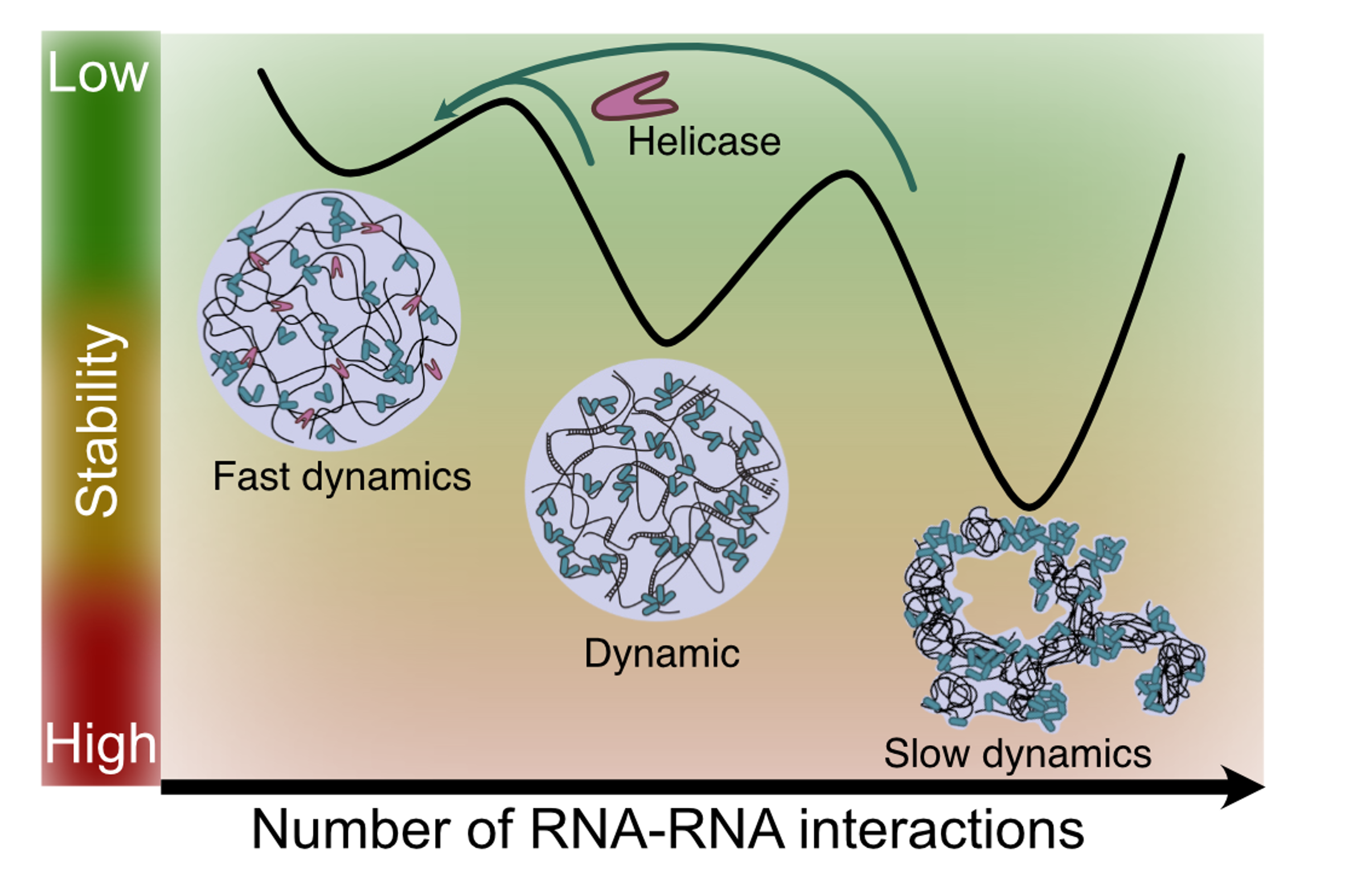
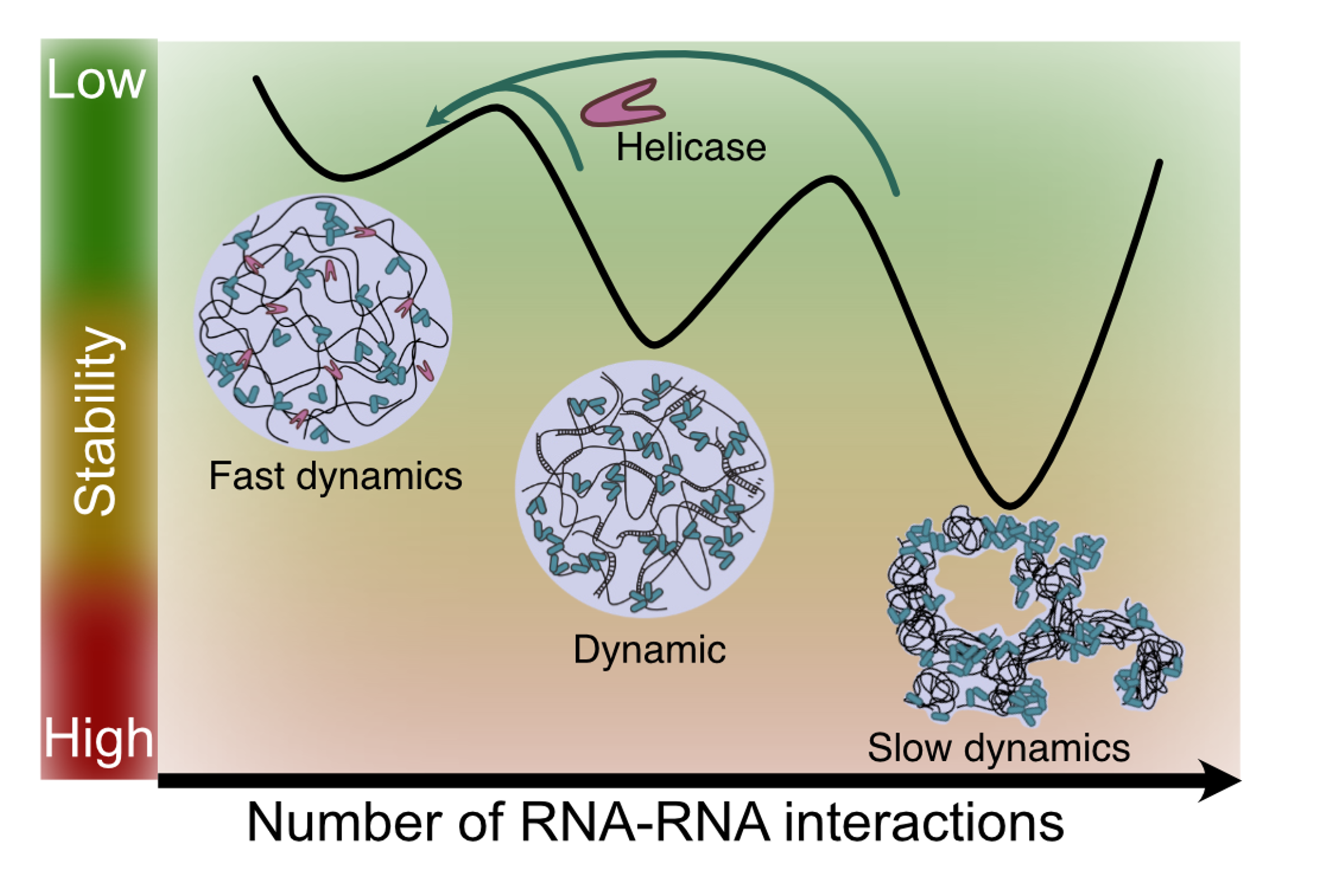
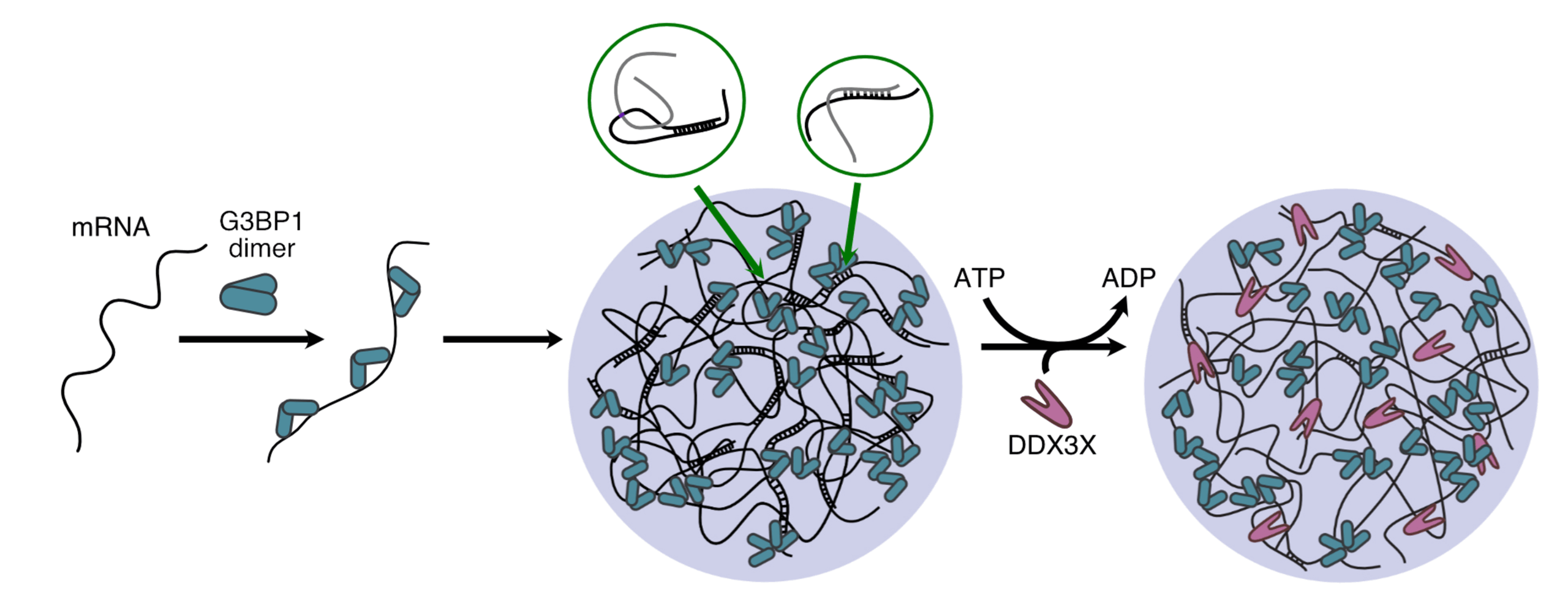
RNP granules, such as neuronal transport granules (NTGs) or stress-induced RNP granules (SGs), are condensates that play key roles in translation regulation. Their aberrant state is as-sociated with neurodegeneration and cancer. RNP granule assembly and the underlying regula-tory mechanisms are not understood. Our preliminary data show that the RNA-binding protein Ras GTPase-activating protein-binding protein 1 (G3BP1) interacts with unfolded RNA molecules to assemble RNP granules. RNA accumulation in granules leads to RNA-RNA interactions, inhibiting RNA mobility and translatability. The DEAD-box RNA helicase (DDX3X) localizes to RNP granules to attenuate RNA-RNA interactions, rendering the condensates dynamic and ena-bling mRNA translation. DDX3X disease variants cannot resolve RNA-RNA interactions causing RNA granule persistence. We suggest that RNP granules mediate inhibitory RNA-RNA interactions, which must be modulated by RNA helicases to regulate RNA availability and translatability.
Research questions
- How do RNP granules regulate RNA availability and translatability in physiology and disease?
- How do RNA helicases regulate RNA structure, dynamics, and organization within RNP granules?
Thesis Project Topic
Topic 1: RNA structures and dynamics in multi-component biomolecular condensates (Schlierf)
Topic 2: Revealing the functional role of RNA-protein condensates in regulating RNA availability (Alberti)
Training
The PhD students will be trained in smFRET and FCS and analysis, advanced imaging and analysis, protein biochemistry and RNP-like granule reconstitution.
Profile of Prospective Students
- Candidates have a Masters degree in physics, biology or related fields
- Candidates should have a sound basis in biochemistry, biophysics, enzymology, quantitative biology, or closely related fields.
- Experience in microscopy, in vitro reconstitution, and protein isolation methods are expected

Supervisors: Simon Alberti (left) and Michael Schlierf (right)
Organization of cytoplasm across space and time (Alberti)
Discipline: Biology
Affiliation: Biotec (TU-Dresden) | Physics of Life (TU Dresden)
Contact: Simon.Alberti (at) tu-dresden (dot) de
Conformational Dynamics in Biomolecules (Schlierf)
Discipline: Biophysics
Affiliation: B CUBE (TU Dresden) | Physics of Life (TU Dresden)
Contact: michael.schlierf (at) tu-dresden (dot) de
Explore other RTG Thesis Projects
Collaborations within the RTG
Click on the different project numbers (e.g. A1) to find out more about the theme of their ongoing collaborations and explore the project details
A2 - Biomolecular condensate regulation (Harmon)
See project details: https://dresdencondensates.org/projects/a2/
A4 - Theory and simulation of polymer-assisted condensates (Sommer)
See project details: https://dresdencondensates.org/projects/a4/
B2 - Characterizing the role of RNP granules in ALS (Sterneckert)
See project details: https://dresdencondensates.org/projects/b2/
A1 - Role of surface condensation for the assembly of cortical proteins (Honigmann)
See project details: https://dresdencondensates.org/projects/a1/
A3 - Spectroscopy and local interactions in condensates and organization of the cytoplasm (Adams)
See project details: https://dresdencondensates.org/projects/a3/
A5 - Capillary forces and the force response of condensates (Jahnel and Grill)
See project details: https://dresdencondensates.org/projects/a5/
B1 - Elucidating the mechanisms underlying mRNA translation regulation by condensation (biophysics and biochemistry) (Alberti and Schlierf)
See project details: https://dresdencondensates.org/projects/b1/
B3 - Sequence to function mapping of condensate proteomes (Toth-Petroczy)
See project details: https://dresdencondensates.org/projects/b3/
B4 - Role of condensates in biological time across mammals (Ebisuya and Hyman)
See project details: https://dresdencondensates.org/projects/b4/
B5 - Role of condensates in epigenetics (experiments and theory) (Brugués and Schiessel)
See Project Details: https://dresdencondensates.org/projects/b5/
A5 - Capillary forces and the force response of condensates
Capillary forces and the force response of condensates (A5)
Objective
The goal of of A5 is to understand how condensates respond to mechanical forces and how condensate-mediated capillary forces influence the shape and organization of biopolymers.
Project Description
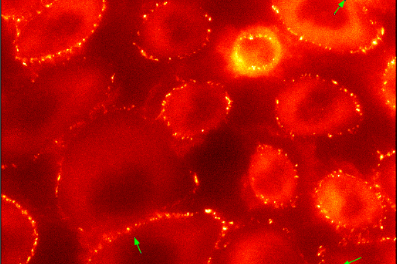
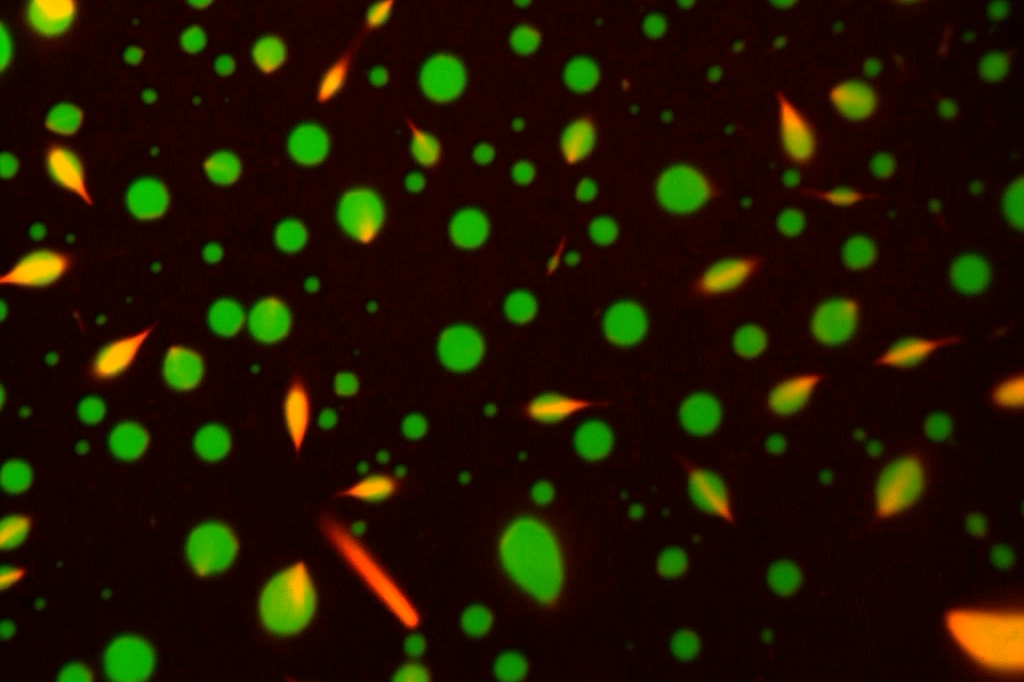
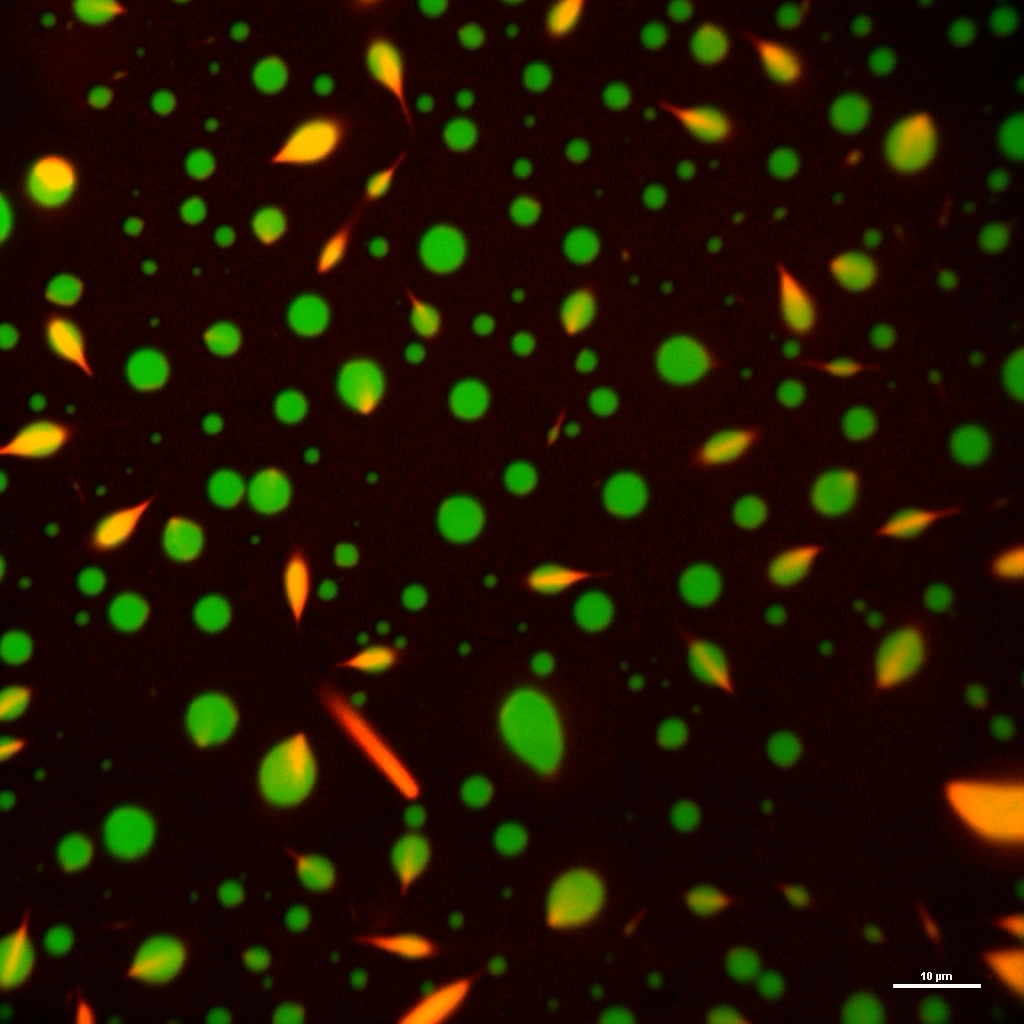
Biomolecular condensates are mostly considered as special biochemical environments. However, due to their tendency to minimize their interfacial area, condensates generate relevant capillary forces that can bundle and bend soft cellular structures. Recently, the Grill lab has explored the mechanical effects of condensates on various biopolymers such as nucleic acids and cytoskeletal filaments. In collaboration with the Hyman and Jülicher groups, the Grill group has discovered the prewetting and co-condensation of transcription factors on DNA and that condensates can bundle DNA. Furthermore, the Grill group has discovered a condensate dynamic instability that is crucial to establishing the actin cell cortex during early nematode development. Finally, preliminary data from the Grill lab demonstrate shape changes of cortical condensates are likely driven by condensate surface tension and identify a mechanical role of DNA-binding proteins during the assembly of the nuclear periphery (Collaboration with von Appen group at MPI-CBG). Despite this progress, the rich interplay between condensate interfacial energies, condensate-polymer interaction energies, and biopolymer bending energies has not been systematically studied and remains poorly understood.
Research questions
1) How do condensates respond to mechanical forces and exert capillary forces on various cellular structures?
2) Can we predict the mechanical condensate-polymer behavior?
3) How to measure the interfacial properties and interaction energies of condensates and their substrates?
Thesis Project Topic
Regulatory RNA folding in and around condensates
Training
The PhD students will be trained in in soft matter physics concepts, single-molecule experiments, protein and nucleic acid molecular biology methods, data and image analysis methods and state-of-the-art instrumentation such as optical tweezers and light-sheet microscopy.
Profile of Prospective Students
- Candidates have a Masters degree in physics, biology or related fields
- Candidates should have a sound basis in (theoretical) biophysics, polymer science, quantitative biology, or closely related fields.
- Experience in microscopy and protein isolation methods are expected
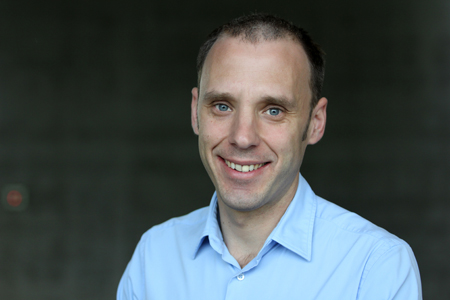
Supervisor: Stephan Grill
Physics of Life
Discipline: Biophysics
Affiliation: MPI-CBG | CSBD | Physics of Life (TU Dresden)
Contact: grill (at) mpi-cbg (dot) de
Explore other RTG Thesis Projects
Collaborations within the RTG
Click on the different project numbers (e.g. A1) to find out more about the theme of their ongoing collaborations and explore the project details
A2 - Biomolecular condensate regulation (Harmon)
See project details: https://dresdencondensates.org/projects/a2/
A4 - Theory and simulation of polymer-assisted condensates (Sommer)
See project details: https://dresdencondensates.org/projects/a4/
B2 - Characterizing the role of RNP granules in ALS (Sterneckert)
See project details: https://dresdencondensates.org/projects/b2/
A1 - Role of surface condensation for the assembly of cortical proteins (Honigmann)
See project details: https://dresdencondensates.org/projects/a1/
A3 - Spectroscopy and local interactions in condensates and organization of the cytoplasm (Adams)
See project details: https://dresdencondensates.org/projects/a3/
A5 - Capillary forces and the force response of condensates (Jahnel and Grill)
See project details: https://dresdencondensates.org/projects/a5/
B1 - Elucidating the mechanisms underlying mRNA translation regulation by condensation (biophysics and biochemistry) (Alberti and Schlierf)
See project details: https://dresdencondensates.org/projects/b1/
B3 - Sequence to function mapping of condensate proteomes (Toth-Petroczy)
See project details: https://dresdencondensates.org/projects/b3/
B4 - Role of condensates in biological time across mammals (Ebisuya and Hyman)
See project details: https://dresdencondensates.org/projects/b4/
B5 - Role of condensates in epigenetics (experiments and theory) (Brugués and Schiessel)
See Project Details: https://dresdencondensates.org/projects/b5/
A3 - Spectroscopy and local interactions in condensates and organization of the cytoplasm
Spectroscopy and local interactions in condensates and organization of the cytoplasm (A3)
Objective
The goal of of A3 is to understand how local interactions of solvent and biomolecules drive phase separation and regulate condensate biochemistry
Project Description
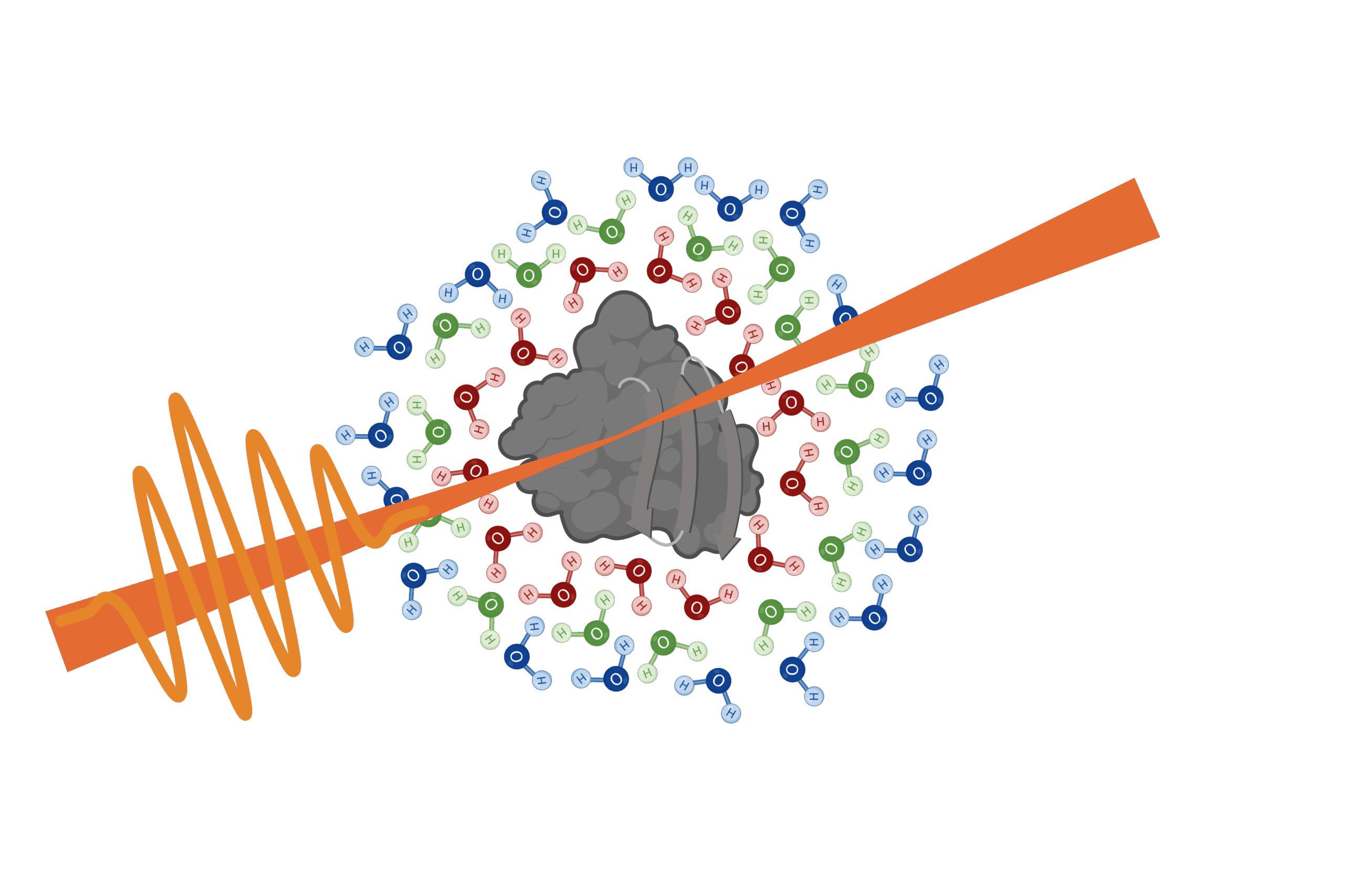
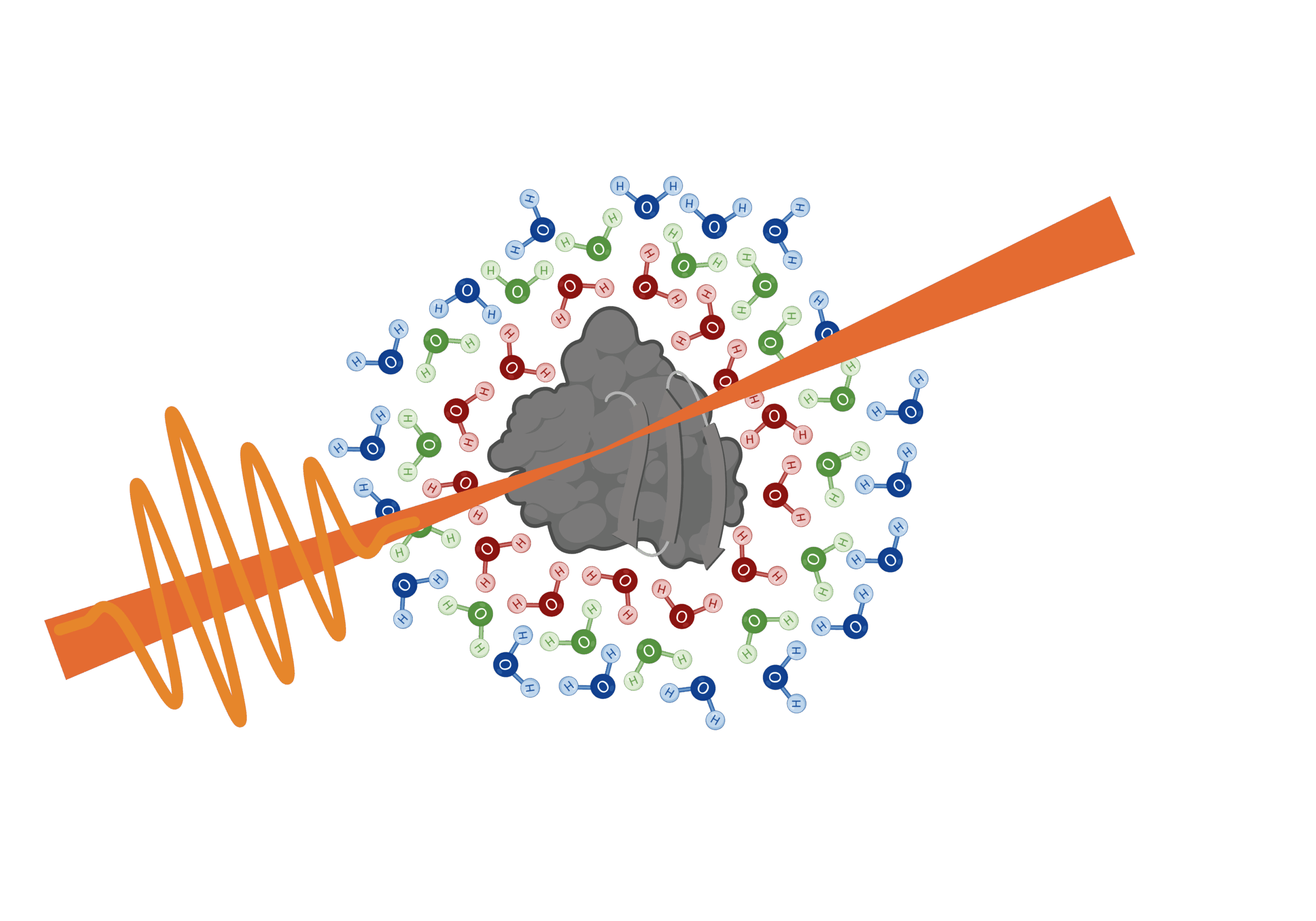
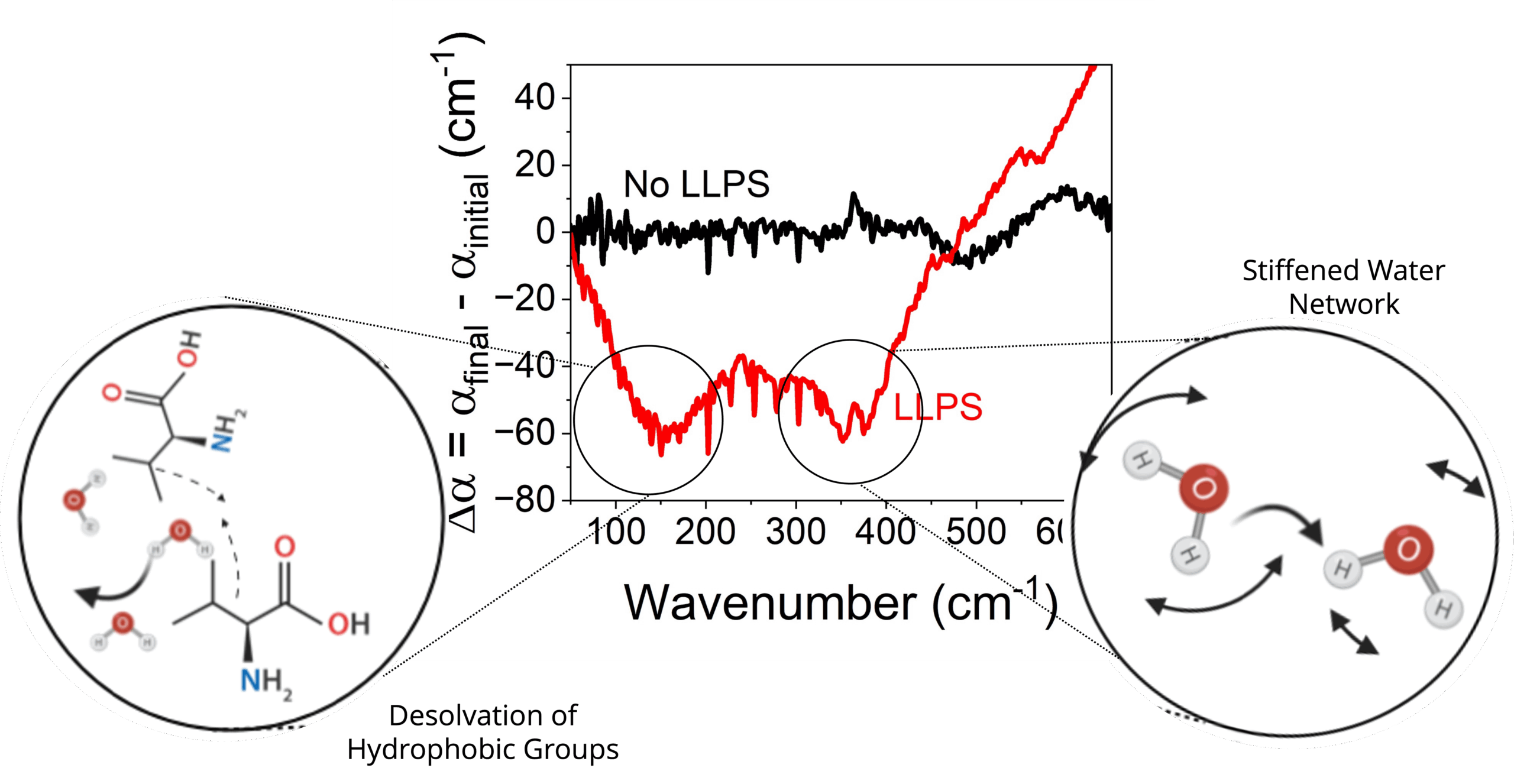
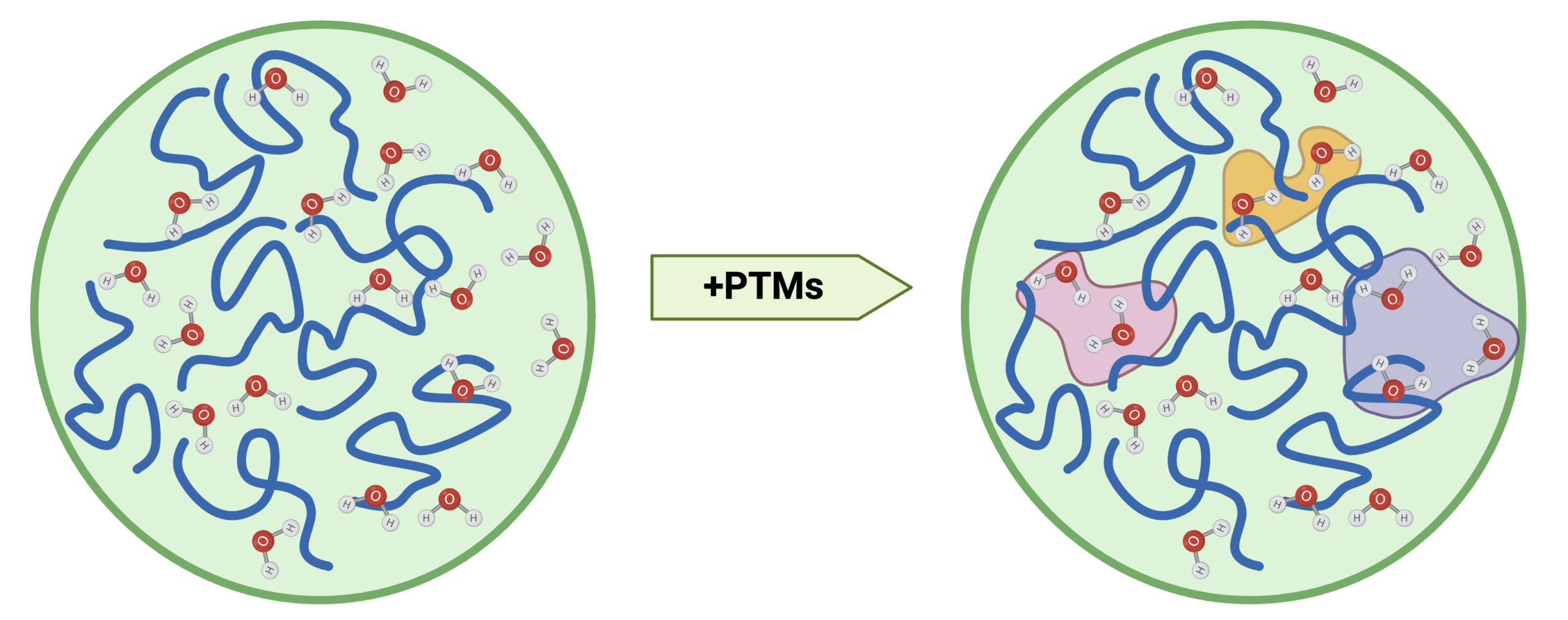
Solvation water is fundamental to the structure and function of proteins and integral in coordinating biochemical reactions. Phase separation of intrinsically disordered proteins into two coexisting liquid phases is entropically unfavorable and creates compartments with a distinct solvent environment. The Adams group has developed spectroscopic methods to study the solvation of proteins and have shown that the global solvation is sensitive to molecular level changes in the protein sequence. Application of this technique to biomolecular condensates has provided insight into their solvent environment and the local water-protein interactions. Desolvation of specific molecular groups entropically drives phase transitions, while water inside of condensates is tightly bound to the proteins and has fewer degrees of freedom, resulting an environment with a stiff hydrogen bonding network.
Research questions
How does physical chemistry of the solvent influence local interactions in condensates? How are molecular properties of condensates linked to their macroscopic properties? How do local mutations of proteins impact the condensate environment? What are the molecular properties of cytoplasm and how do solvent properties of the cytoplasm regulate spatiotemporal organization of condensates?
Thesis Project Topic
Local Hydration of Post Translationally Modified Condensate Proteins.
Training
The PhD students will be trained in various spectroscopic methods, microscopy, and physical chemistry concepts.
Profile of Prospective Students
- Candidates have a Masters degree in chemistry, physics or related fields
- Candidates should have a sound basis in physical chemistry, physics, biochemistry, or closely related fields.
- Experience in spectroscopy is expected

Supervisor: Ellen Adams
Physical Chemistry of Biomolecular Condensates
Discipline: Physical Chemistry
Affiliation: Physics of Life (TU Dresden) | Helmholtz Zentrum Dresden Rossendorf (HZDR) | Dresden Concept
Contact: ellen_marie.adams (at) tu-dresden (dot) de
Explore other RTG Thesis Projects
Collaborations within the RTG
Click on the different project numbers (e.g. A1) to find out more about the theme of their ongoing collaborations and explore the project details
A2 - Biomolecular condensate regulation (Harmon)
See project details: https://dresdencondensates.org/projects/a2/
A4 - Theory and simulation of polymer-assisted condensates (Sommer)
See project details: https://dresdencondensates.org/projects/a4/
B2 - Characterizing the role of RNP granules in ALS (Sterneckert)
See project details: https://dresdencondensates.org/projects/b2/
A1 - Role of surface condensation for the assembly of cortical proteins (Honigmann)
See project details: https://dresdencondensates.org/projects/a1/
A3 - Spectroscopy and local interactions in condensates and organization of the cytoplasm (Adams)
See project details: https://dresdencondensates.org/projects/a3/
A5 - Capillary forces and the force response of condensates (Jahnel and Grill)
See project details: https://dresdencondensates.org/projects/a5/
B1 - Elucidating the mechanisms underlying mRNA translation regulation by condensation (biophysics and biochemistry) (Alberti and Schlierf)
See project details: https://dresdencondensates.org/projects/b1/
B3 - Sequence to function mapping of condensate proteomes (Toth-Petroczy)
See project details: https://dresdencondensates.org/projects/b3/
B4 - Role of condensates in biological time across mammals (Ebisuya and Hyman)
See project details: https://dresdencondensates.org/projects/b4/
B5 - Role of condensates in epigenetics (experiments and theory) (Brugués and Schiessel)
See Project Details: https://dresdencondensates.org/projects/b5/
A2 - Regulation of phase separated droplets
Biomolecular condensate regulation (A2)
Objective
The goal of of A2 is to understand how molecular architecture regulates existence, composition, and properties of multi-component condensates.
Project Description
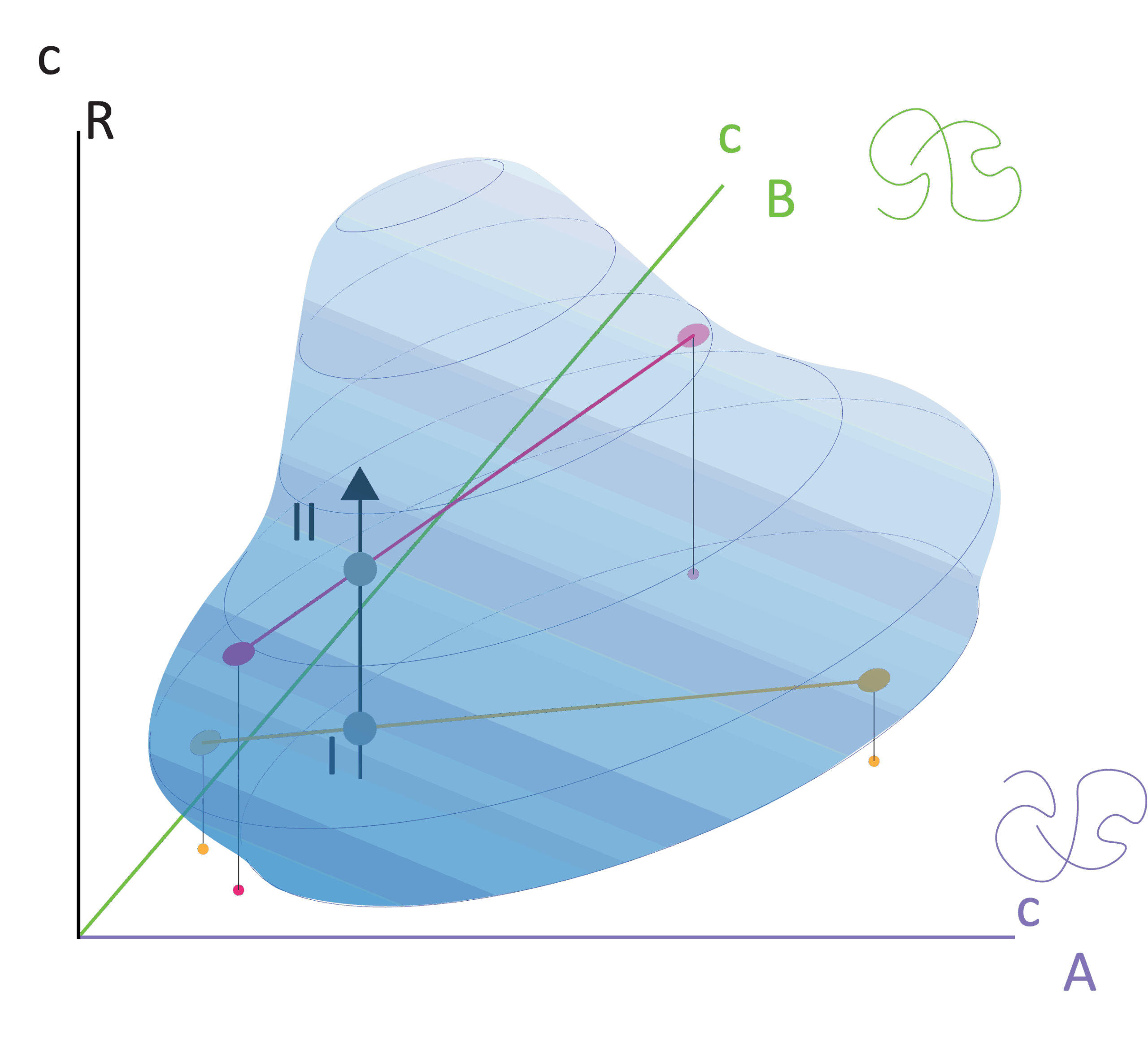
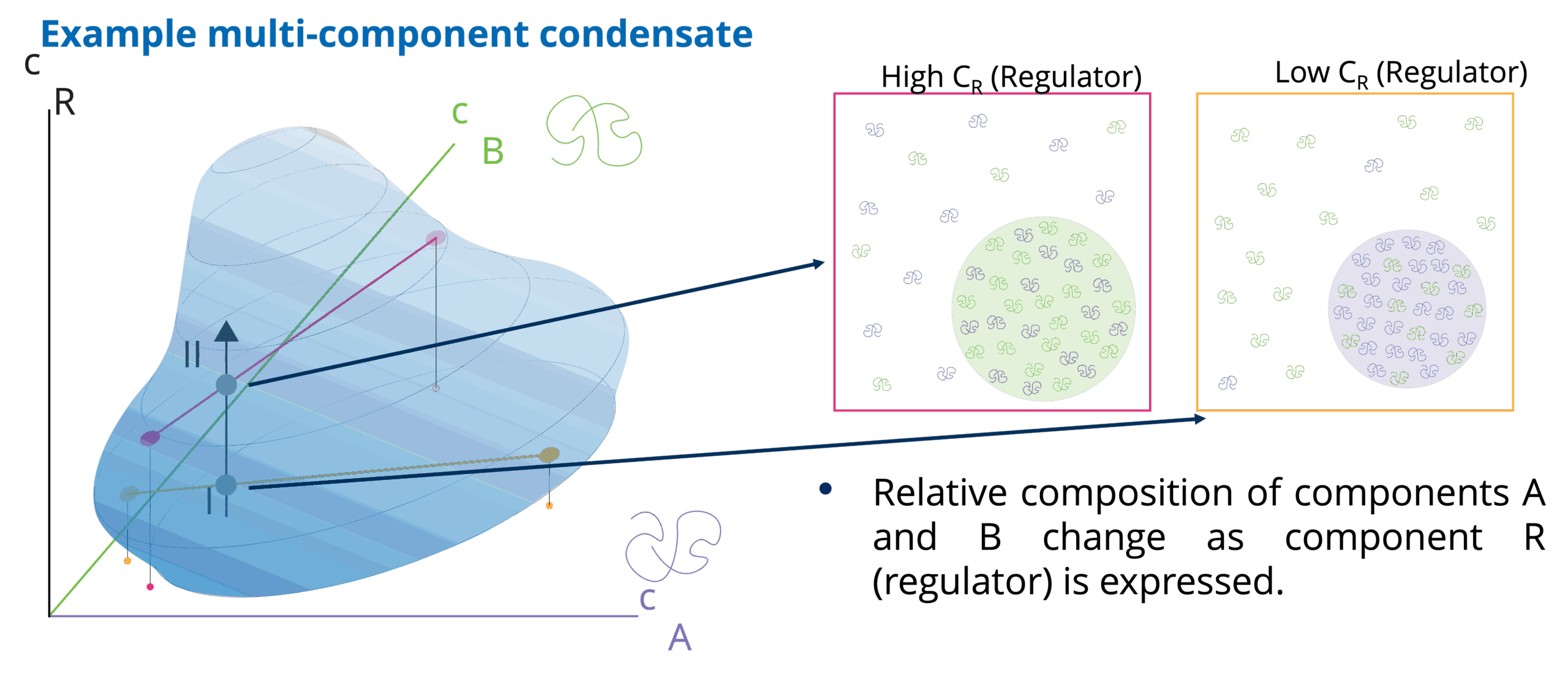
Cellular condensates contain many components and their precise composition dictates functionality. A key means to regulate condensate composition and properties is through changes in the abundance of other “regulator” molecules that interact with core condensate components through multiple folded or disordered domains. Harmon has studied compositional regulation the-oretically and developed robust and scalable coarse-grained simulations for the phase separation of multi-domain biopolymers containing folded as well as disordered domains. Compositional regulation has been explored in some minimal model systems. However, the general principles by which molecular architecture dictates regulatory possibilities in multi-component condensates remains unknown.
Research questions
What are the basic principles that determine how regulatory proteins control multi-component condensates? How does the design of the scaffold proteins relate to their response to differently designed regulators? To what extent can basic principles of condensate regulation be extended to the higher complexity case of proteins containing folded as well as disordered domains?
Thesis Project Topic
Regulation of condensates driven by multi-domain proteins
Training
The PhD students will be trained in different methodologies for coarse grained simulations, and in analytical and numerical tech-niques, in particular solving Cahn-Hilliard equations and kinetic models for interface dynamics. Using simulations, a library of multi-domain proteins will be studied.
Profile of Prospective Students
- Candidates have a Masters degree in physics or related fields
- Candidates should have a sound basis in statistical physics, soft matter theory or closely related fields.
- Experience in computer simulations and numerical methods are expected

Supervisor: Tyler Harmon
Theory and simulation of biomolecular condensates (Droplets)
Discipline: Theoretical physics
Affiliation: Leibniz IPF Dresden
Contact: tylerharmon (at) ipfdd (dot) de
Explore other RTG Thesis Projects
Collaborations within the RTG
Click on the different project numbers (e.g. A1) to find out more about the theme of their ongoing collaborations and explore the project details
A2 - Biomolecular condensate regulation (Harmon)
See project details: https://dresdencondensates.org/projects/a2/
A4 - Theory and simulation of polymer-assisted condensates (Sommer)
See project details: https://dresdencondensates.org/projects/a4/
B2 - Characterizing the role of RNP granules in ALS (Sterneckert)
See project details: https://dresdencondensates.org/projects/b2/
A1 - Role of surface condensation for the assembly of cortical proteins (Honigmann)
See project details: https://dresdencondensates.org/projects/a1/
A3 - Spectroscopy and local interactions in condensates and organization of the cytoplasm (Adams)
See project details: https://dresdencondensates.org/projects/a3/
A5 - Capillary forces and the force response of condensates (Jahnel and Grill)
See project details: https://dresdencondensates.org/projects/a5/
B1 - Elucidating the mechanisms underlying mRNA translation regulation by condensation (biophysics and biochemistry) (Alberti and Schlierf)
See project details: https://dresdencondensates.org/projects/b1/
B3 - Sequence to function mapping of condensate proteomes (Toth-Petroczy)
See project details: https://dresdencondensates.org/projects/b3/
B4 - Role of condensates in biological time across mammals (Ebisuya and Hyman)
See project details: https://dresdencondensates.org/projects/b4/
B5 - Role of condensates in epigenetics (experiments and theory) (Brugués and Schiessel)
See Project Details: https://dresdencondensates.org/projects/b5/
A4 - Theory and simulation of polymer-assisted condensates
Theory and simulation of polymer-assisted condensates (A4)
Objective
The goal of of A4 is to understand formation, dissolution and functions of multi-component polymer assisted condensates using generic concepts of polymer physics.
Project Description
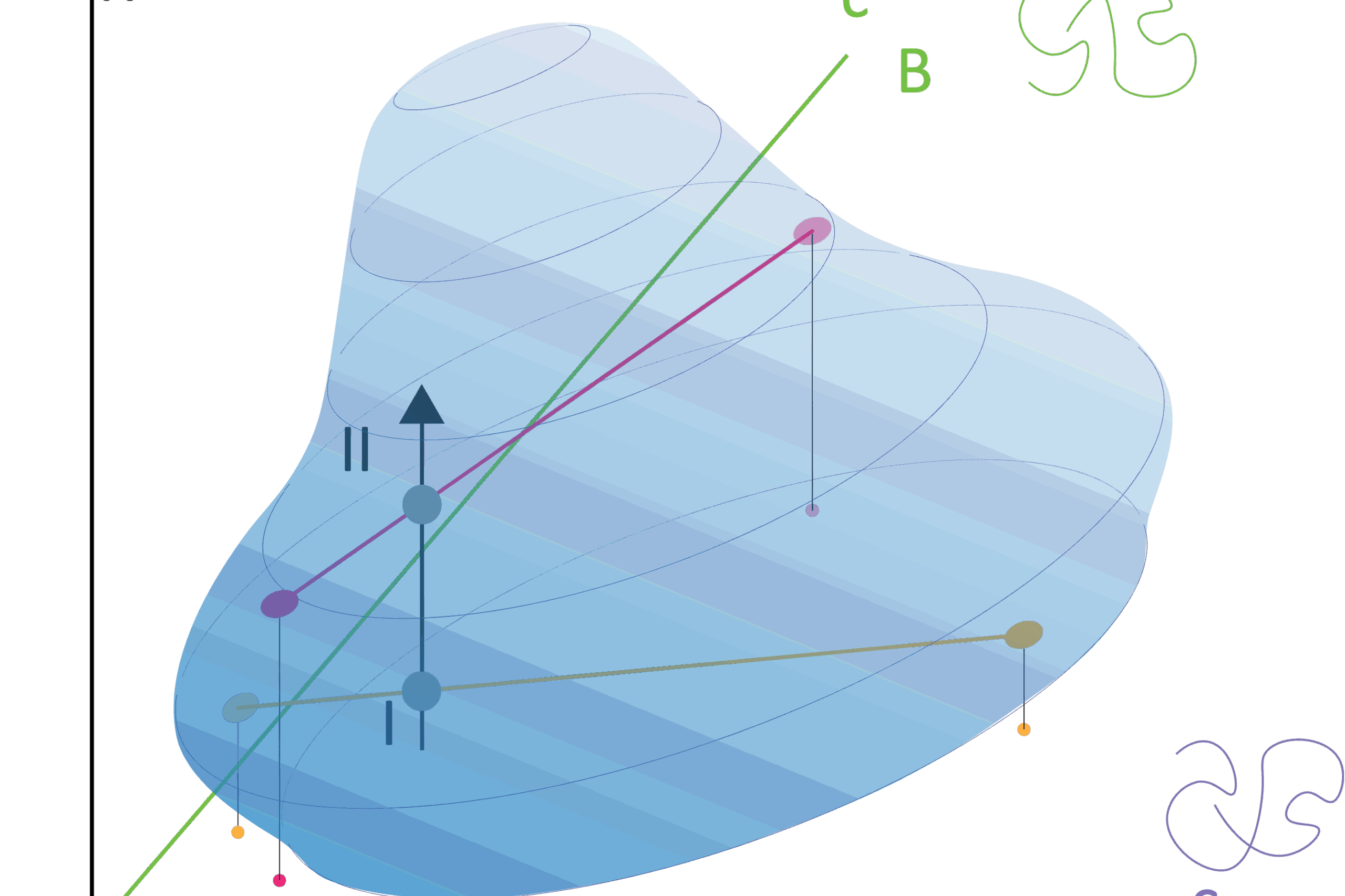
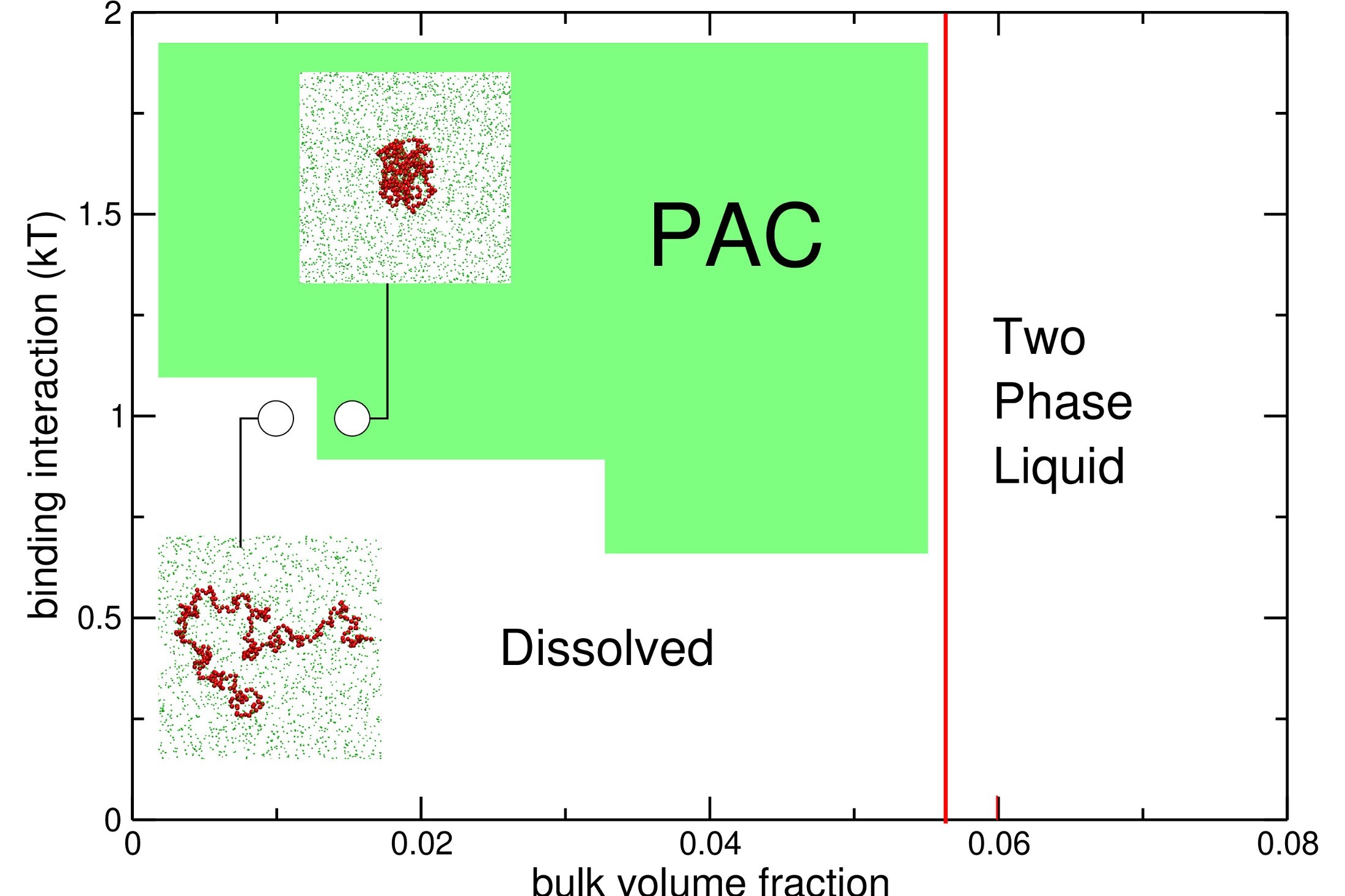
Large biopolymers such as DNA and RNA,play a pivotal role in the formation of condensates, owing to their low mixing entropy and vast number of conformational degrees of freedom. In particular, they can locally trigger condensate formation.
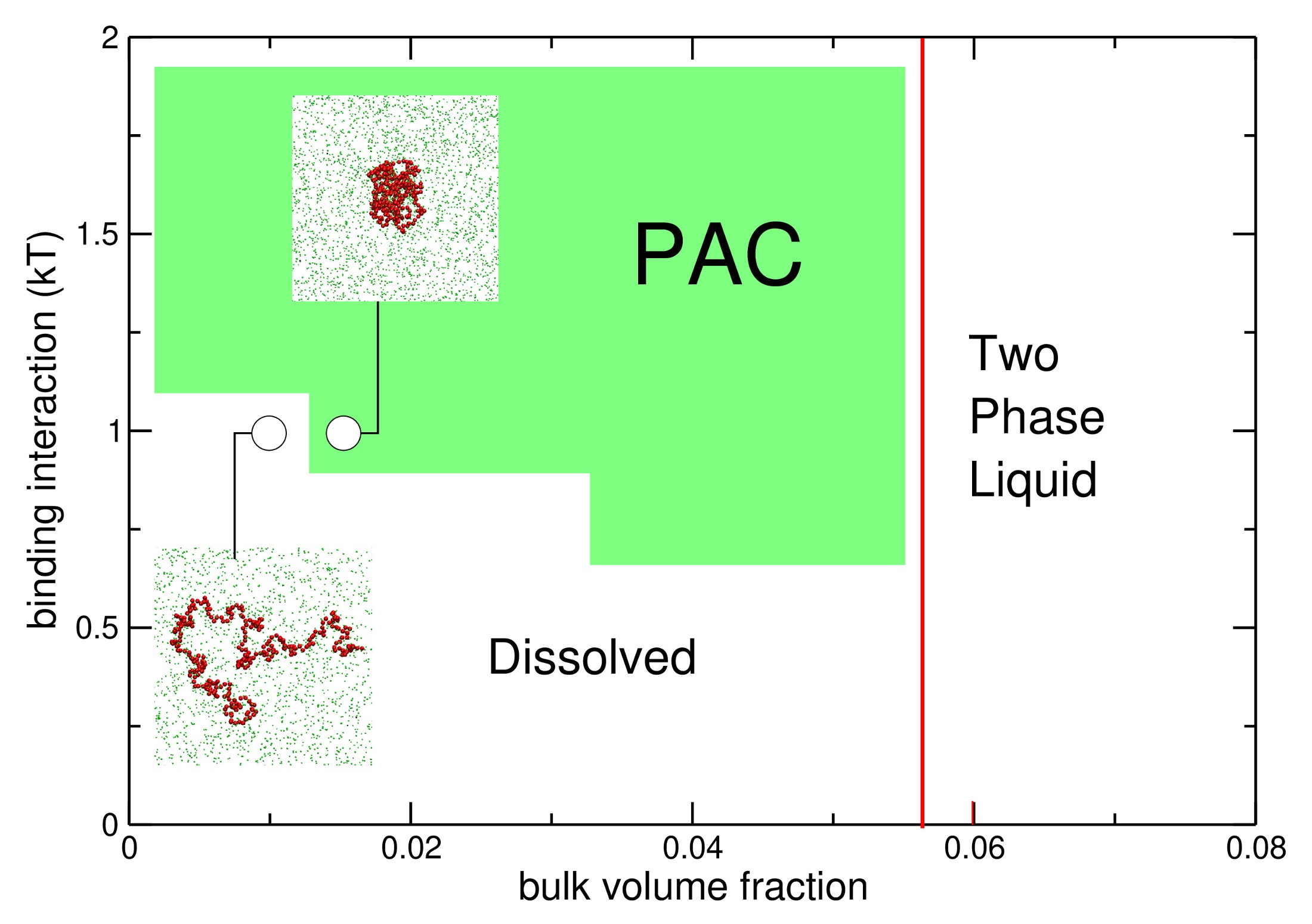
The Sommer group has pioneered analytical and simulation-based approaches to study polymers in multi-component solutions, predicting unusual phase transitions such as co-nonsolvency and polymer-assisted condensation (PAC). In collaboration with the Schiessel group, the PAC concept has been applied to explain the formation of heterochromatin and mechanisms of epigenetic inheritance.
Currently, we are investigating more complex scenarios, including wetting behavior and compartmentalization in multi-component condensates. Computer simulations play a key role in exploring and analyzing these complex phase behaviors.
Research questions
- How can multi-phase coexistence be incorporated into the polymer-assisted condensation (PAC) model?
- How can coarse-grained simulations be refined to model specific condensate problems such as DNA target search, DNA repair, polymerization/depolymerization processes (PAR), or post-translational modifications?
- How can field-theoretic methods be applied to explore the phase space of complex protein/polynucleotide solutions? How can these concepts be extended to understand the dynamics of condensates?
Thesis Project Topic
Training
The PhD students will be trained in mathematical-analytical methods, polymer physics and statistical thermodynamics of phase transitions, various simulation methods and numerical concepts.
Profile of Prospective Students
- Candidates have a Masters degree in physics or related fields
- Candidates should have a sound basis in statistical physics, soft matter theory or closely related fields.
- Experience in computer simulations and numerical methods are expected

Supervisor: Jens-Uwe Sommer
Soft Matter Theory and Polymer Physics
Discipline: Theoretical physics
Affiliation: TU Dresden, Faculty of Physics | Leibniz IPF Dresden | Physics of Life (TU Dresden)
Contact: jens-uwe.sommer (at) tu-dresden (dot) de
Explore other RTG Thesis Projects
Collaborations within the RTG
Click on the different project numbers (e.g. A1) to find out more about the theme of their ongoing collaborations and explore the project details
A2 - Biomolecular condensate regulation (Harmon)
See project details: https://dresdencondensates.org/projects/a2/
A4 - Theory and simulation of polymer-assisted condensates (Sommer)
See project details: https://dresdencondensates.org/projects/a4/
B2 - Characterizing the role of RNP granules in ALS (Sterneckert)
See project details: https://dresdencondensates.org/projects/b2/
A1 - Role of surface condensation for the assembly of cortical proteins (Honigmann)
See project details: https://dresdencondensates.org/projects/a1/
A3 - Spectroscopy and local interactions in condensates and organization of the cytoplasm (Adams)
See project details: https://dresdencondensates.org/projects/a3/
A5 - Capillary forces and the force response of condensates (Jahnel and Grill)
See project details: https://dresdencondensates.org/projects/a5/
B1 - Elucidating the mechanisms underlying mRNA translation regulation by condensation (biophysics and biochemistry) (Alberti and Schlierf)
See project details: https://dresdencondensates.org/projects/b1/
B3 - Sequence to function mapping of condensate proteomes (Toth-Petroczy)
See project details: https://dresdencondensates.org/projects/b3/
B4 - Role of condensates in biological time across mammals (Ebisuya and Hyman)
See project details: https://dresdencondensates.org/projects/b4/
B5 - Role of condensates in epigenetics (experiments and theory) (Brugués and Schiessel)
See Project Details: https://dresdencondensates.org/projects/b5/
A1 - Role of surface condensation for the assembly of cortical proteins
Role of surface condensation for the assembly of cortical proteins (A1)
Objective
The goal of A1 is to understand how surface condensation of scaffold proteins at biological membranes can control the patterning and the mechanics of an acto-myosin cell cortex.
Research Description
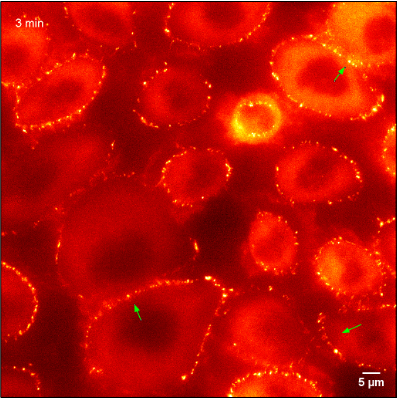
The formation of epithelial tissue requires precise spatiotemporal control of cell surface properties such as formation of adhesion complexes that are linked to the cell cortex at the level of the cell membrane1,2. The Honigmann group has discovered that surface condensation of ZO scaffold proteins at the membrane is a mechanism that cells exploit to pattern adhesion complexes and the actin cortex3. In vitro reconstitutions have shown that ZO surface condensates can nucleate and bundle actin fibers, which can drive the formation of a variety of cortical patterns4-6. How ZO surface condensation and actin polymerization are linked and what mechanical properties emerge from this is not understood.
Research questions
How does surface condensation of ZO proteins induce actin recruitment and polymerization? and What are the mechanical properties of a condensed ZO1-actin cortex on the membrane?
Thesis Project Topic
Linking surface condensation of scaffold proteins to the assembly of cell junctions
Training
The PhD students will be trained in protein and membrane biochemistry methods including membrane reconstitutions, biophysical methods such as fluorescence fluctuation spectroscopy, in addition to super-resolution microscopy and image analysis methods.
Profile of Prospective Students
- Candidates have a Masters degree in biophysics or related fields
- Candidates are expected to have a solid basis in physics, biology, or related fields.
- Experience in fluorescence microscopy is plus

Supervisor: Alf Honigmann
Membrane Organization of Cells and Tissues
Discipline: Biophysics
Affiliation: Biotec (TU-Dresden) | Physics of Life (TU Dresden)
Contact: alf.honigmann (at) tu-dresden (dot) de
Lab Webpage
References
- Roignot J, Peng X, Mostov K. Polarity in Mammalian Epithelial Morphogenesis. Cold Spring Harb Perspect Biol. 2013;5(2):a013789-a013789. https://doi.org/10.1101/cshperspect.a013789
- Mukenhirn M, Wang CH, Guyomar T, Bovyn MJ, Staddon MF, van der Veen RE, Maraspini R, Lu L, Martin-Lemaitre C, Sano M, Lehmann M, Hiraiwa T, Riveline D, Honigmann A. Tight junctions control lumen morphology via hydrostatic pressure and junctional tension. Dev Cell. https://doi.org/10.1016/j.devcel.2024.07.016
- Beutel O, Maraspini R, Pombo-García K, Martin-Lemaitre C, Honigmann A. Phase Separation of Zonula Occludens Proteins Drives Formation of Tight Junctions. Cell. 2019;179(4):923-936.e11. https://doi.org/10.1016/j.cell.2019.10.011
- Zhao X, Bartolucci G, Honigmann A, Jülicher F, Weber CA. Thermodynamics of wetting, prewetting and surface phase transitions with surface binding. New J Phys. 2021;23(12):123003. https://doi.org/10.1088/1367-2630/ac320b
- Pombo-García, K, Adame-Arana, O, Martin-Lemaitre, C, Jülicher, F, Honigmann, A. Membrane prewetting by condensates promotes tight junction belt formation. Nature. 2024; 632, 647–655. https://doi.org/10.1038/s41586-024-07726-0
- Sun, D, Zhao, X, Wiegand, T, Bartolucci, G, Martin-Lemaitre, C, Grill, S, Hyman, AA, Weber, C, Honigmann, A. Assembly of tight junction belts by surface condensation and actin elongation. bioRxiv. Published online 2023. https://doi.org/10.1101/2023.06.24.546380
Explore other RTG Thesis Projects
Collaborations within the RTG
Click on the different project numbers (e.g. A1) to find out more about the theme of their ongoing collaborations and explore the project details
A2 - Biomolecular condensate regulation (Harmon)
See project details: https://dresdencondensates.org/projects/a2/
A4 - Theory and simulation of polymer-assisted condensates (Sommer)
See project details: https://dresdencondensates.org/projects/a4/
B2 - Characterizing the role of RNP granules in ALS (Sterneckert)
See project details: https://dresdencondensates.org/projects/b2/
A1 - Role of surface condensation for the assembly of cortical proteins (Honigmann)
See project details: https://dresdencondensates.org/projects/a1/
A3 - Spectroscopy and local interactions in condensates and organization of the cytoplasm (Adams)
See project details: https://dresdencondensates.org/projects/a3/
A5 - Capillary forces and the force response of condensates (Jahnel and Grill)
See project details: https://dresdencondensates.org/projects/a5/
B1 - Elucidating the mechanisms underlying mRNA translation regulation by condensation (biophysics and biochemistry) (Alberti and Schlierf)
See project details: https://dresdencondensates.org/projects/b1/
B3 - Sequence to function mapping of condensate proteomes (Toth-Petroczy)
See project details: https://dresdencondensates.org/projects/b3/
B4 - Role of condensates in biological time across mammals (Ebisuya and Hyman)
See project details: https://dresdencondensates.org/projects/b4/
B5 - Role of condensates in epigenetics (experiments and theory) (Brugués and Schiessel)
See Project Details: https://dresdencondensates.org/projects/b5/